Tech
The Stack for Bharat: Inside Shiprocket’s $125 Billion War for the Indian SME


TL;DR
In the high-stakes theater of Indian e-commerce, a profound structural divide has long favored the giants. On one side stands the logistical might of Amazon and Flipkart, equipped…
Indian e-commerce has historically been tilted in favor of the giants. Amazon and Flipkart dominate with their proprietary fulfillment engines while millions of Micro, Small and Medium Enterprises (MSMEs) struggle with fragmented shipping and high return rates.
Founded in 2017, Shiprocket aimed to fix this by becoming the "operating system" for modern Indian Direct-to-Consumer (D2C) brands rather than just another courier aggregator. Today, the company powers an estimated 4–5% of all e-commerce transactions in India. By offering an Amazon-like infrastructure to smaller sellers, Shiprocket allows a merchant in a Tier 3 town to compete with global conglomerates.
As the company prepares for a ₹2,500 crore IPO, here are five strategic takeaways defining its evolution from a basic shipping tool to a tech-enabled unicorn.
Why Tier 2+ Towns are the New Growth Engine
The focus of Indian commerce is shifting. The AI Commerce Report 2025 projects digital commerce in "Bharat" (India’s Tier 2 and Tier 3 cities) will reach $125 billion by 2025, driven by 886 million internet users alongside growing rural digital adoption.
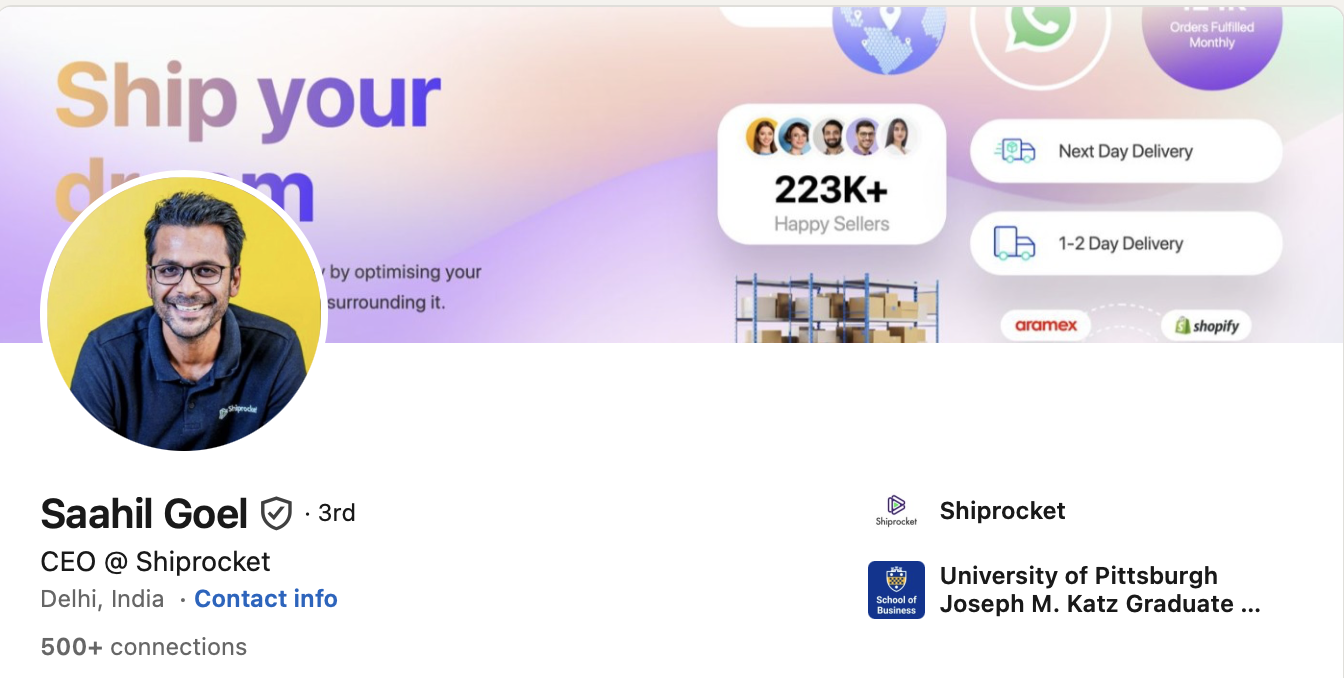
For Shiprocket, metropolitan areas are already saturated. The real frontier is the rural MSME. Co-Founder and CEO Saahil Goel notes the vision centers on "helping the Indian SMBs by taking their business online and competing with larger players like Amazon." Consumers in smaller cities now expect the exact same speed and personalization as buyers in South Mumbai or Bangalore. Shiprocket provides the tech stack to close this regional logistics gap.
AI as a Margin Protector
Logistics runs on incredibly thin margins. To adapt, Shiprocket transitioned into a data-first technology suite focused on predictive fulfillment. The platform uses historical sales data and demand forecasting to position inventory closer to the buyer before they even place an order.
Key AI products driving this shift include:
Courier Recommendation Engine (CORE): An AI logic layer that picks the best courier for over 24,000 pin codes based on cost, performance and real-time delivery ratings.
Shiprocket Sense: An API-driven platform that converts raw transit data into usable business intelligence.
Voice AI and Trends: Tools offering voice integration for merchants along with deep analytics on consumer behavior.
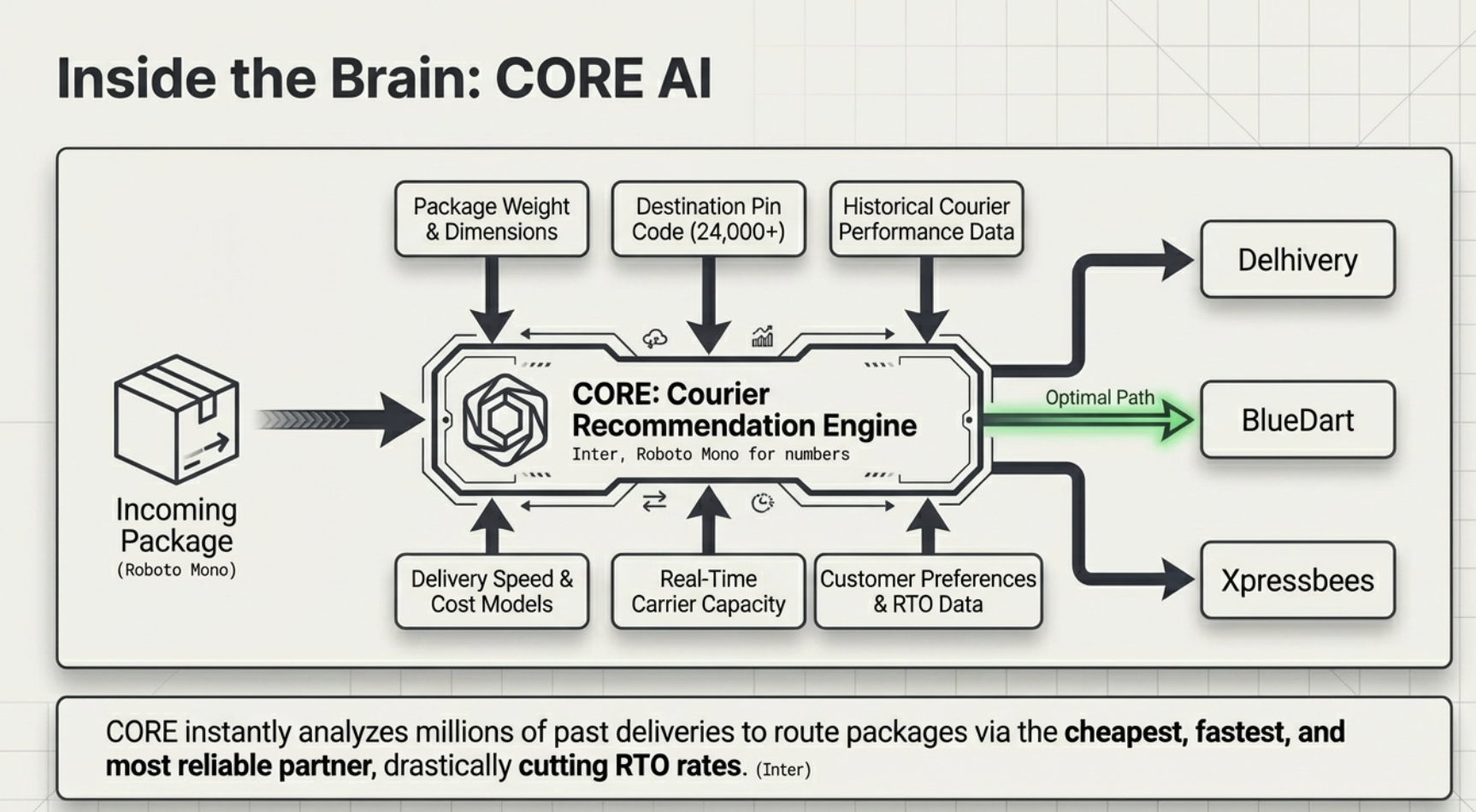
Treating logistics as a software problem helps merchants automate decisions and replace manual guesswork with solid data.
The Wigzo Gambit: Owning the Customer Data
Shiprocket made a major strategic move in January 2022 by acquiring a 75% stake in the customer data platform Wigzo Tech. This pushed the logistics firm closer to capturing customer affinity data, opening a new frontier for e-commerce technology.
The combination works because Shiprocket already tracks delivery behavior like where people live, their payment methods and their return frequencies. Meanwhile, Wigzo tracks customer affinity—what people actually want and when they are likely to buy it.
Merging these datasets lowers the merchant's Customer Acquisition Cost (CAC). Brands can offer a highly personalized shopping experience that keeps them locked into the Shiprocket ecosystem. Once a seller relies on the platform for both fulfillment and the data needed to drive repeat sales, switching to a competitor becomes too costly.
The IPO Paradox: Scale vs. Accounting Realities
Shiprocket’s push toward a ₹2,500 crore public listing highlights a common tech-startup paradox: rapid revenue growth paired with significant losses.
Financial Performance Overview
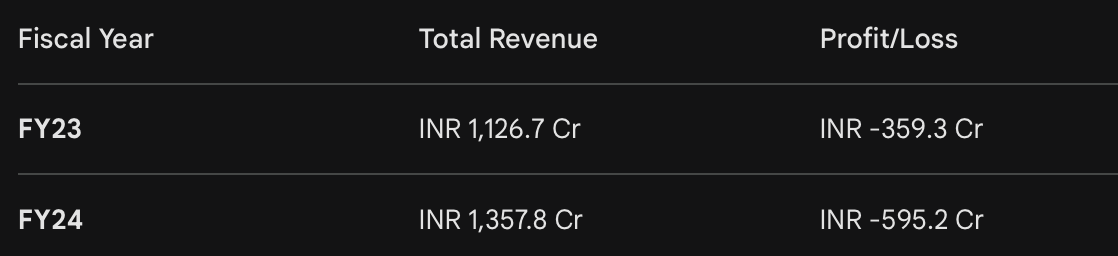
Source: Shiprocket Success Story - StartupTalky
By September 2025, the platform served over 145,000 active merchants and processed roughly 97 million transactions. While FY24 losses widened, a closer look at unit economics tells a different story. Recent reports show the company’s net loss for FY25 narrowed to ₹74.5 crore, alongside achieving a turnaround in EBITDA.
Notably, ₹91 crore of that loss came from Employee Stock Ownership Plan (ESOP) expenses—a non-cash accounting charge rather than an operational deficit.
Shiprocket’s asset-light model remains its biggest advantage. Partnering with more than 17 logistics providers instead of owning a physical fleet lets the company scale across 24,000 pin codes without the heavy capital expenses of traditional shipping firms.
Drones and the 10-Minute Promise
Speed is the next major hurdle. The Quick Commerce sector is expected to grow by up to 85% in 2025 and hit a $5 billion GMV. Ground infrastructure simply can't keep up.
To address this, Shiprocket partnered with Skye Air in August 2023 to integrate autonomous drone logistics into its operations. Outlined in various industry case studies, this isn't a PR stunt but a tactical necessity for bypassing traffic in congested cities like Bangalore or Delhi to hit strict delivery windows. Combining drone technology with a decentralized warehousing network positions Shiprocket to help D2C brands survive the instant-delivery economy.
Beyond the Warehouse
Shiprocket’s growth from a 2017 venture into a major tech player reflects India's broader digital shift. Giving MSMEs access to tools previously reserved for global titans has leveled the playing field for rural entrepreneurs.
As the company gears up for its public debut, the main question for investors is no longer about shipping volume. It's about ecosystem control.
Has Shiprocket built a sustainable bridge for rural MSMEs or created an expensive infrastructure that only the most sophisticated brands can actually afford to use?