AI Startups
AMI Labs Assembled A Dream Team


TL;DR
The Breaking Point at Meta I have been tracking the AI industry closely and the recent split at Meta is fascinating. For years people assumed models like ChatGPT were the ultimate…
The Breaking Point at Meta
I have been tracking the AI industry closely and the recent split at Meta is fascinating. For years people assumed models like ChatGPT were the ultimate path to true intelligence.
But these systems have a major flaw.
They suffer from jagged intelligence. They can write perfect code but they do not understand that a glass will break if it falls off a table. They just guess the next word based on statistics.
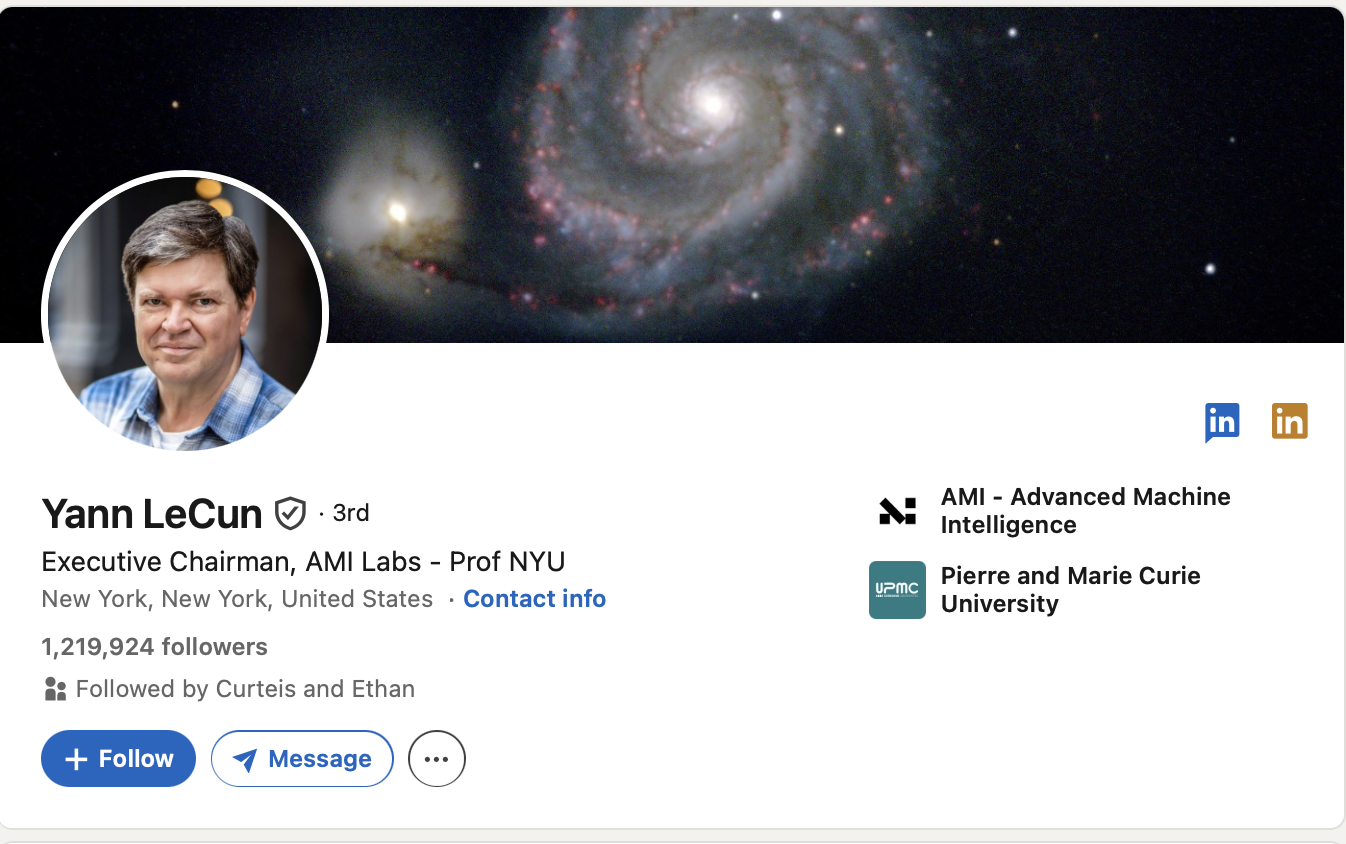
Yann LeCun saw this as a dead end. As a Turing Award winner and the head of AI research at Meta, he argued that we need models that actually understand physical reality.
Meta disagreed and doubled down on text models, creating Meta Superintelligence Labs and bringing in Alexandr Wang to lead the new division. LeCun publicly called Wang inexperienced. The tension finally boiled over in early 2026 amid rumors that benchmark results for Meta's flagship Llama 4 model were manipulated. Realizing the company was obsessed with an architectural dead end, LeCun decided he was done.
He left Meta to build a completely different kind of AI.
The Dream Team Assembling in Paris
LeCun wasted no time. By January 2026 he officially launched Advanced Machine Intelligence Labs. Instead of setting up shop in Silicon Valley, he headquartered the company in Paris with global research hubs in New York, Montreal and Singapore.
He did not do this alone. He pulled together a dream team drawn almost entirely from the top ranks of Meta and Google DeepMind.
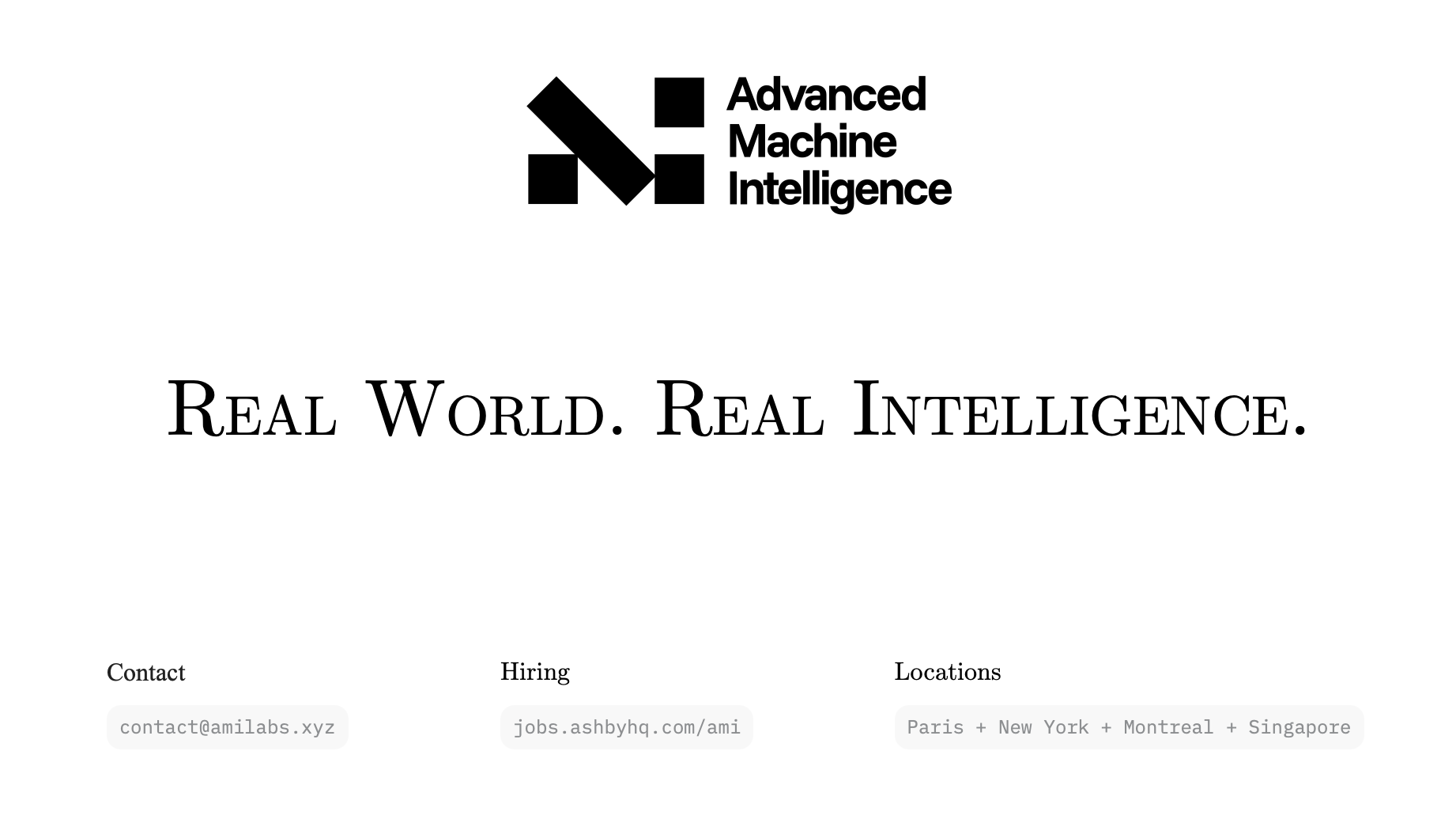
LeCun took on the role of Executive Chairman and brought in Alexandre Lebrun as CEO. Lebrun is a serial entrepreneur with a deep background in healthcare AI. They also recruited Laurent Solly as Chief Operating Officer — Solly spent 13 years running Meta in Europe and knows how to navigate massive global operations. Rounding out the technical leadership are Saining Xie as Chief Science Officer, Pascale Fung as Chief Research Innovation Officer and Michael Rabbat as VP of World Models. It is an all-star roster of scientists who believe the current AI hype is headed in the wrong direction.
A Billion Dollar Bet Against the Trend
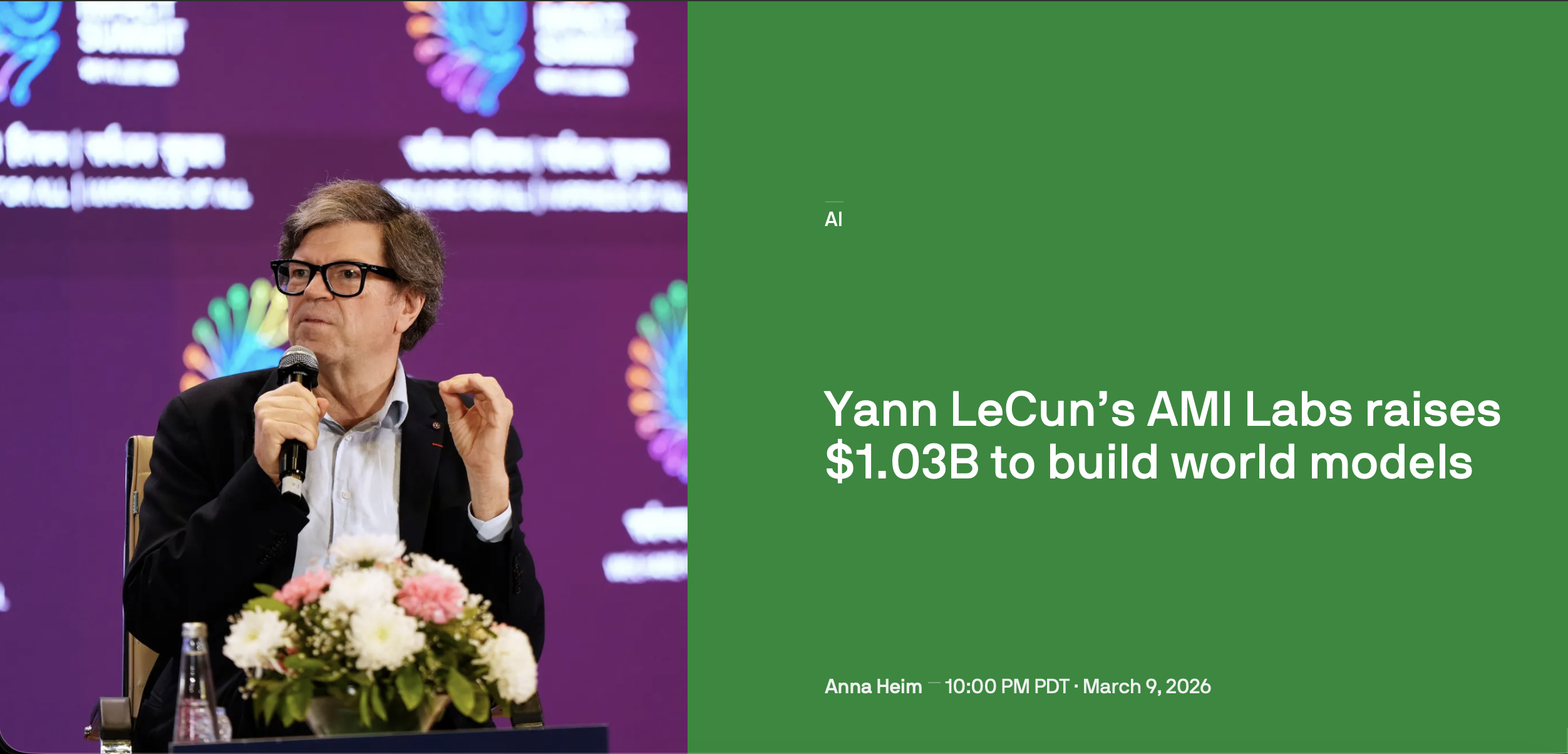
The financial world clearly believes in this team. In March 2026, AMI Labs closed a historic seed funding round, raising $1.03 billion at a $3.5 billion valuation. This stands as the largest seed round in European history.
The investor list is massive and split globally. Cathay Innovation, Greycroft, Hiro Capital, HV Capital and Jeff Bezos's family office led the charge. They also secured strategic backing from tech giants like Nvidia, Toyota Ventures, Samsung, Sea and Publicis Groupe. Even individual heavyweights like Mark Cuban, Eric Schmidt and Xavier Niel put money in.
I find it incredibly telling that Nvidia invested. It signals that the biggest chipmaker in the world is actively hedging its bets in case text-based AI hits a wall.
The Core Mission
So what is this billion dollar team actually building? They are abandoning consumer chatbots to focus entirely on the physical economy. They are building action conditioned world models. Their first major project is a massive foundation model called AMI Video.

They are targeting high-stakes industries where AI cannot afford to hallucinate. In healthcare, they are working with a startup called Nabla to create an internal patient model that can simulate the physical outcomes of medical treatments before a doctor makes a call. In the industrial sector, they are designing AI for robotic arms that can adapt to messy factory floors in real time without breaking down. They might even power Meta's future augmented reality smart glasses because their software is exceptionally light and fast.
The Technical Divide
To really understand why AMI Labs is so disruptive, I need to explain the deep technical divide between their approach and traditional AI.
Standard AI uses a generative architecture. If you ask a generative model to predict the future of a video it tries to guess every single pixel in the next frame. Imagine a video of a car driving down a street. A generative AI wastes massive amounts of computing power trying to predict the chaotic movement of leaves blowing in the wind or light reflecting off a puddle. It is mathematically highly inefficient and causes the system to crash or freeze when put into physical robots.

AMI Labs uses a completely different framework created by LeCun called the Joint Embedding Predictive Architecture. Instead of generating useless pixels, JEPA compresses all that visual data into an abstract mental map. It completely ignores unpredictable background noise like the moving leaves. It only makes temporal predictions based on the core physical dynamics that matter.
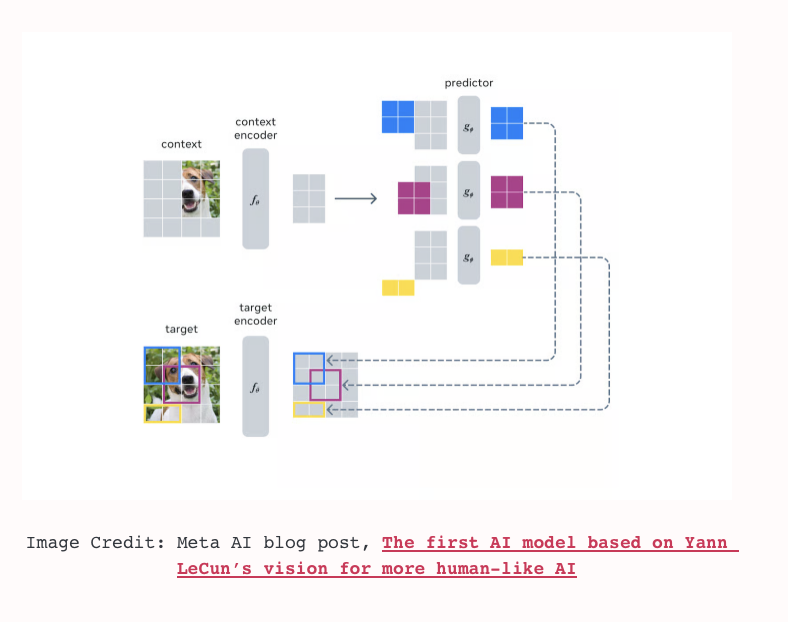
Michael Rabbat is pushing this concept forward with a model called V-JEPA 2. They trained this system on millions of hours of internet videos. By simply watching the videos the AI naturally learned how gravity, mass and momentum work. It did not need a separate physics engine bolted onto it. Because it actually understands physical laws it can learn new physical tasks incredibly fast. In one test it learned to operate a robotic arm in a completely new environment using only 62 hours of training data.
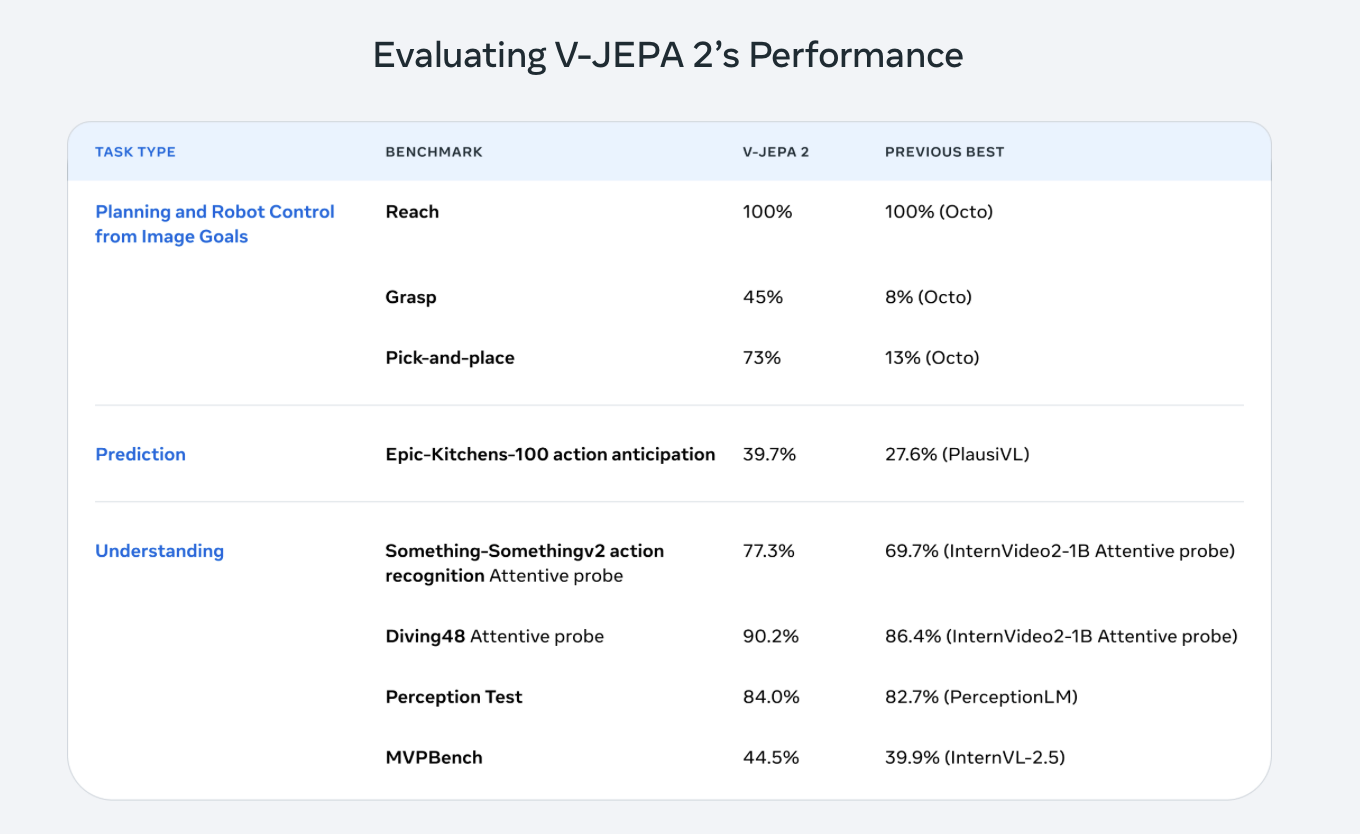
They also solved a major problem with robotic action planning.
Normally an AI might know it needs to move forward to reach a goal but it gets stuck in a mathematical local minimum if there is a physical wall in the way. The researchers at AMI Labs integrated something called Implicit Q-Learning. This forces the AI to encode terminal costs and physical obstacles directly inside its mental map during training. It allows the system to seamlessly account for things like inertia and velocity when planning its movements.
This may make the AI safe and reliable enough to eventually run autonomous machines in our physical world in future.