AI Startups
Move Over, Tech Bros: Why a 17-Year-Old Needed His Dad’s Signature to Build the Next Billion-Dollar AI Startup


TL;DR
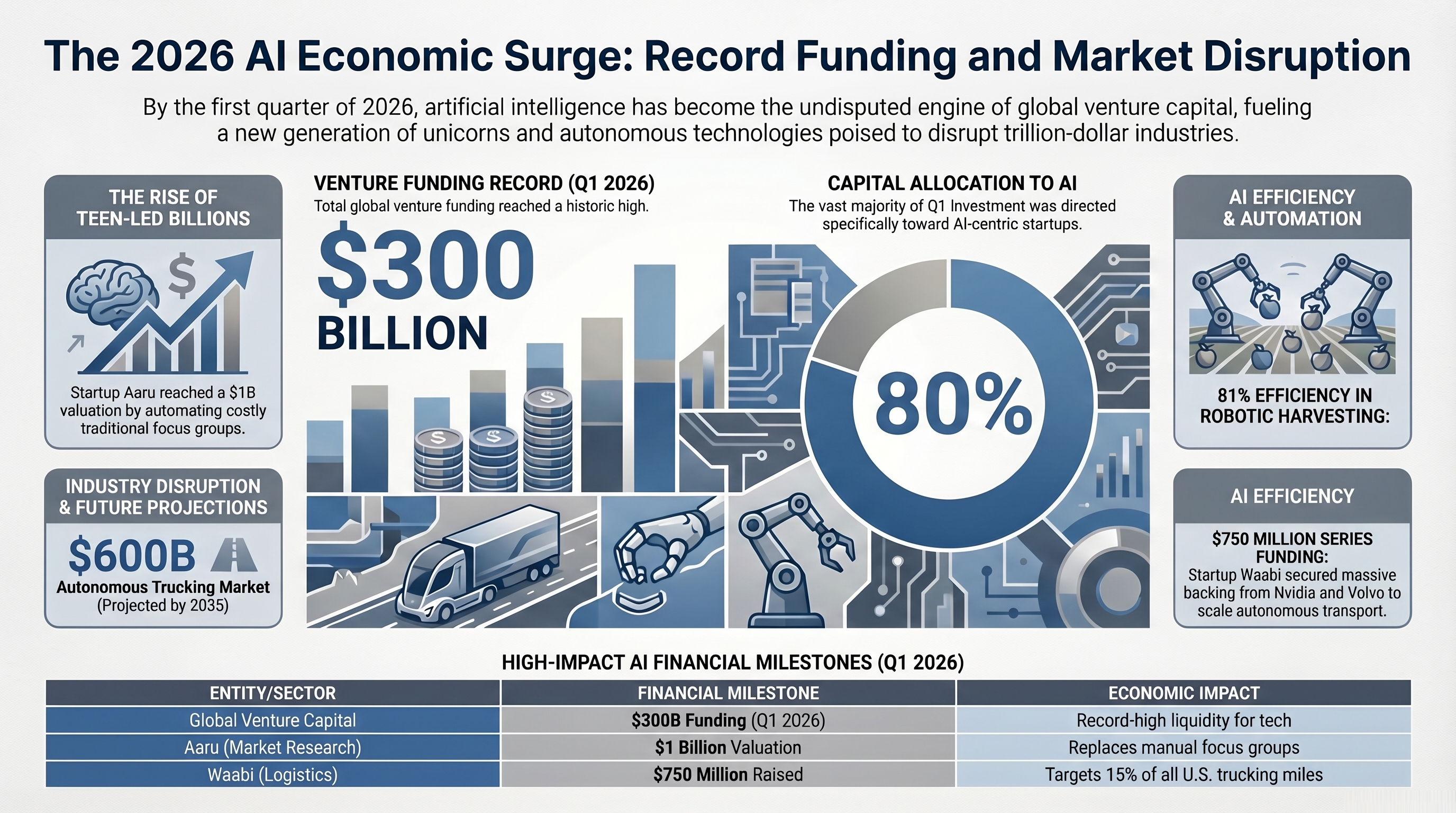
In a record-breaking $300 billion Q1 venture market, a trio of teenagers casually built a $1 billion AI unicorn designed to kill the traditional focus group. Here is the inside scoop on how Aaru is replacing human surveys with synthetic audiences.
If you thought you were underachieving today, you might want to look away.
In a Q1 2026 venture ecosystem that just shattered records with a mind-numbing $300 billion in funding, mostly getting vacuumed up by the heavyweights at OpenAI, Anthropic, and xAI, a massive disruption is quietly brewing. And it's being led by kids who can barely buy a beer.
Introducing Aaru, the AI market research startup that just casually crossed the $1 billion valuation mark.
While the rest of Silicon Valley is obsessing over AGI, Aaru is tackling a much more immediate, multi-billion-dollar headache: the slow, wildly expensive nightmare that is traditional market research.
Here is everything you need to know about the teenage unicorn that’s about to put focus groups out of business.
The Founders: High School Besties to College Dropouts
The brains behind Aaru sound less like seasoned enterprise SaaS veterans and more like the cast of a Gen Z sitcom.
Cameron Fink (20) & Ned Koh (21): These two met on their first day of high school at Lake Forest Academy. They initially tried their hand at health-tech with a startup called Elda Bio before realizing their true obsession was the "problem of predictions." They dropped out of Harvard and Dartmouth almost immediately to go all-in.
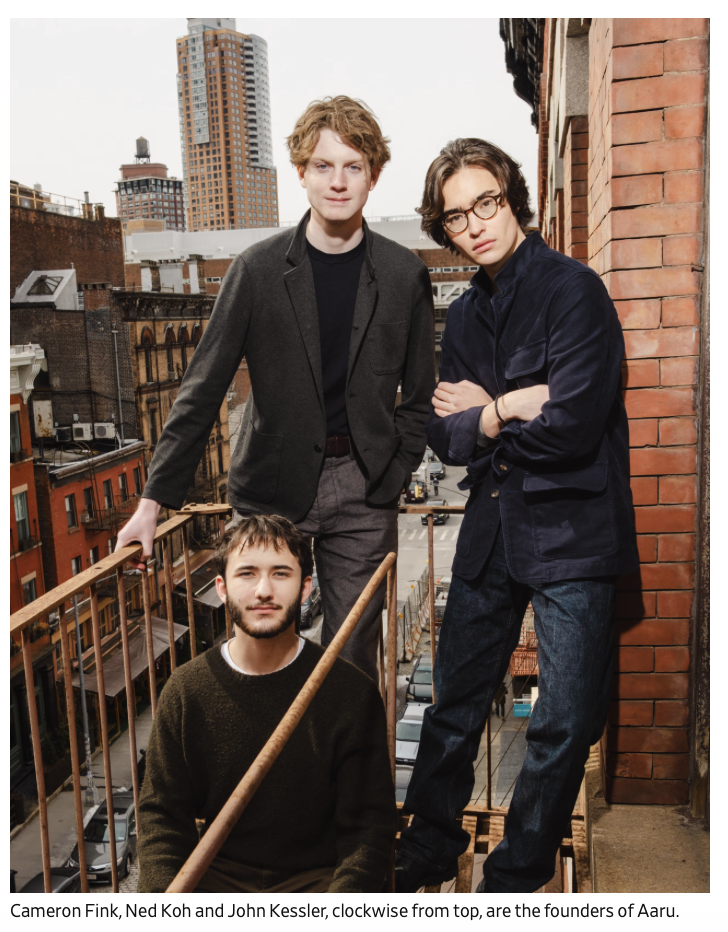
John Kessler (17): Yes, you read that right. The Chief Technology Officer of a billion-dollar company is 17. In fact, Kessler is so young that his father legally had to sign off on Aaru's venture investment paperwork.
Their early days were exactly as chaotic as you’d expect from brilliant teenagers with sudden funding. Aaru operated out of a friend’s basement before upgrading to a New York headquarters that featured a basketball hoop, a conference room that doubled as a co-founder's bedroom, and a literal "rage room" where the team would smash tables with hammers to blow off steam after coding failures.
Killing the Traditional Focus Group
Why did heavy-hitters like Accenture, Diplo and the Z Fellows program throw money at a trio of teenagers?
Because the tech is brilliant.
Traditionally, if a brand wants to test a new ad campaign or product, they spend millions wrangling real humans into focus groups or paying them to click through surveys. It's labor-intensive, biased and agonisingly slow.
Aaru bypasses humans entirely.

They deploy thousands of sophisticated AI personas designed to perfectly mimic human demographics, behaviours and opinions. Instead of finding 500 suburban moms to ask about a new laundry detergent, Aaru generates an entire "synthetic audience" of AI agents that can instantly predict how that demographic will react.
It is instantaneous and infinitely scalable market research.
The Hiccups and The Home Runs
Of course, when you're building bleeding-edge simulation tech, you're going to break a few things.
Aaru initially tried to validate their AI agents by predicting political elections. They swung and missed in 2024, incorrectly predicting a Kamala Harris victory. But instead of folding, the team used the failure to drastically refine their models.
"They realized their bots were fallible, so they tore the system down and rebuilt it to be smarter." The pivot paid off. They partnered with legendary pollster Frank Luntz to validate their simulated testing approach. Suddenly, the corporate world took notice.

Today, Aaru isn't just a fun science project; it's an enterprise juggernaut. Their client roster already includes absolute titans:
🍔 McDonald’s
🍺 Boston Beer
🎬 A24 (Because even indie film studios need to know what the algorithm wants)
💊 Bayer
The TechWhoKnows Verdict
Aaru is the perfect encapsulation of the 2026 tech boom.
We are shifting from simply generating text and images to building actual synthetic realities that businesses can use to simulate the real world.
Traditional market research agencies should be terrified. When you can spin up 10,000 highly targeted, hyper-realistic AI consumers in a matter of seconds, why would you ever pay a human to fill out a survey again?
Fink, Koh, and Kessler are fundamentally rewiring how brands talk to consumers.
And to think, one of them still has to ask to use the bathroom during 4th period.