AI Startups
Who Keeps the Lights On When the Last Expert Retires?

TL;DR
The energy grid is hemorrhaging its most irreplaceable asset — human expertise. As aging infrastructure crumbles and veteran engineers retire in droves, Cloneable's Agentic AI is doing the unthinkable: bottling decades of expert knowledge and deploying it at scale, before the last person who knows how to keep the lights on walks out the door.
Introduction: The Quiet Crisis at the Edge
The North American electrical grid is a breathing $30 trillion museum piece. We are currently attempting to rewire it in mid-flight while the North American Electric Reliability Corporation (NERC) warns of an elevated risk of blackouts across the continent. To stave off collapse, the Department of Energy (DOE) recently injected a monumental $3.5 billion spread across 44 states.
But the real crisis is a hemorrhage of intelligence.
We are asking a dwindling workforce to modernise a massive infrastructure as the subject matter experts who kept the lights on for decades retire. They are walking out the door with decades of "tribal knowledge" that exists nowhere in a manual.
As we shift toward a decentralised landscape, the industry has reached a breaking point. We can no longer manage 21st-century complexity with 20th-century paper logs.
This is the birth of "Industrial Intelligence," where platforms like Cloneable are democratising deep tech to replicate expert decision-making at machine speed.
Scaling Tribal Knowledge
Cloneable is trying to capture it before it disappears.
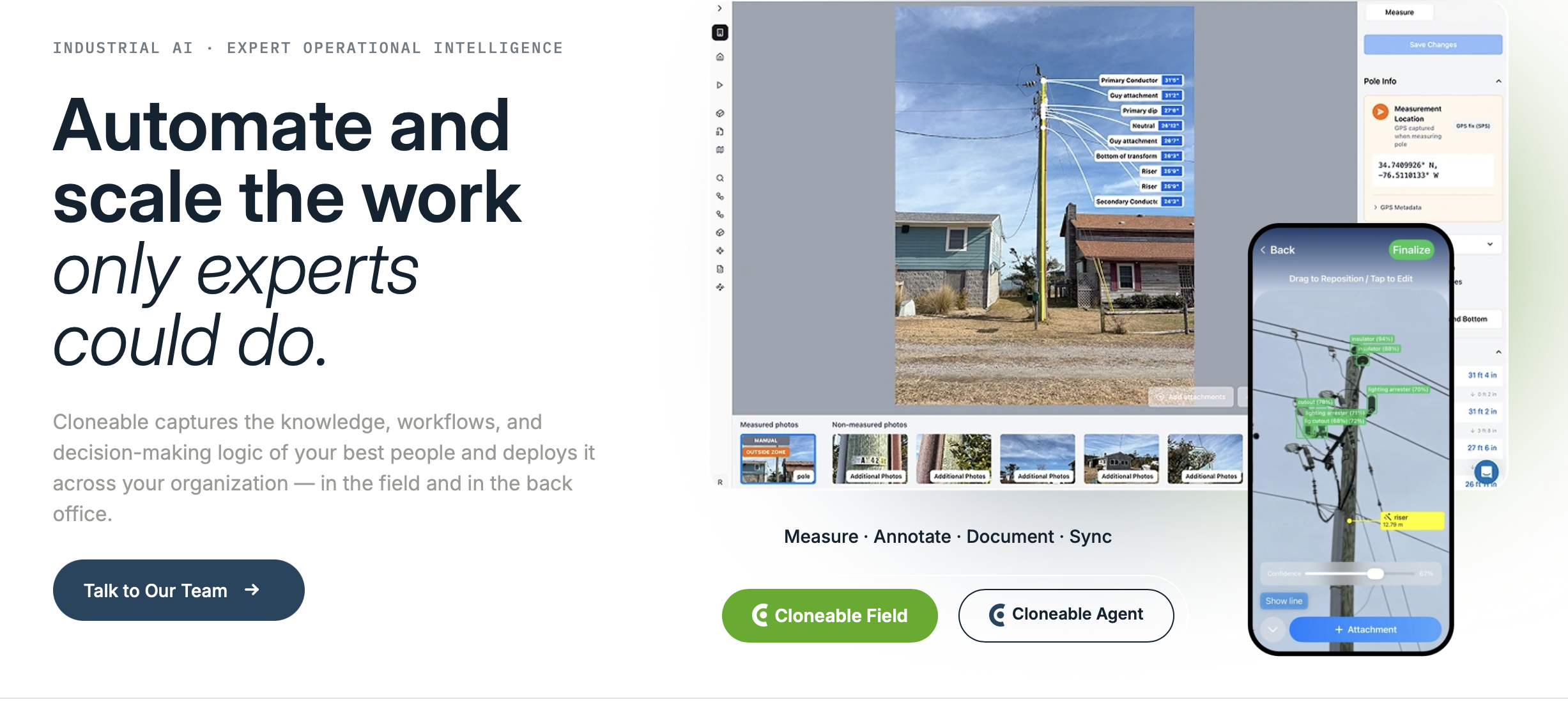
Their approach is behavioral cloning: the AI watches an expert work inside whatever software they already use, learning the decisions they make and why. Less about feeding the model a clean dataset, more about shadowing someone until you understand how they think.
This is a force multiplier:
Scalability: A single human expert might diagnose 10 complex field cases a day. A cloned AI application can handle 10,000 cases simultaneously across a global network.
Retention: When an expert retires, their computer stays on the job, ensuring institutional memory isn't lost.
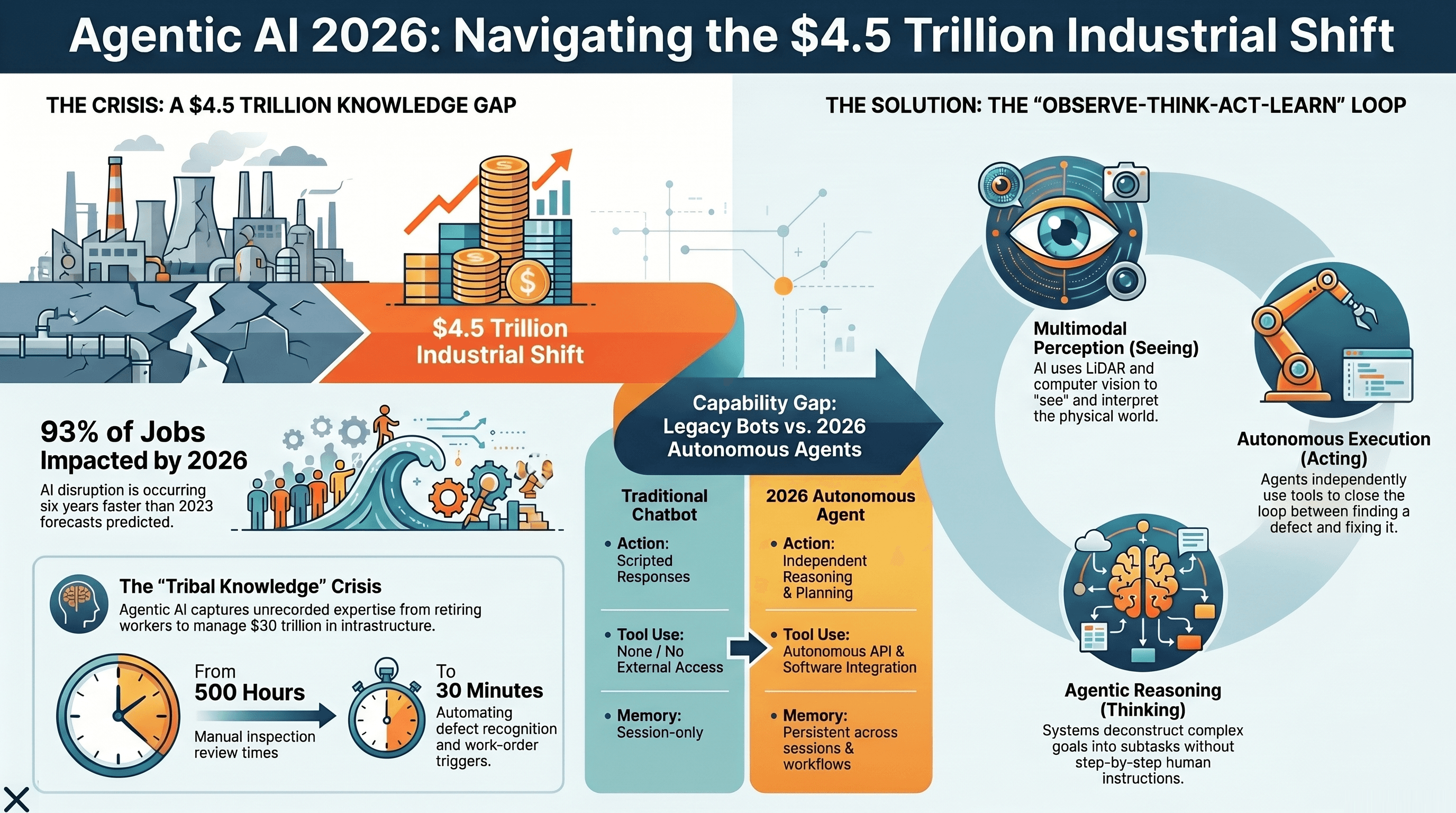
This shift is the cornerstone of a 4.5 trillion labor transition. With Cognizant research indicating that 93% of jobs will be impacted by AI, the energy sector is proving that AI isn't about replacing the human. Grounding this movement is Cloneable’s recent 4.6 million Seed round led by Congruent Ventures, signaling a massive investor appetite for solutions that tackle these "boring" but vital industrial pain points.
"Our mission is to democratize deep tech for any human or machine." — Cloneable Founders
From "Pilot Fatigue" to Agentic Action
For years, the energy sector has suffered from "pilot fatigue", where isolated AI experiments look great in a slide deck but crumble when faced with the messy reality of live grid operations.
To move forward, we must evolve from "Isolated AI" to a "Digital Triplet" model.
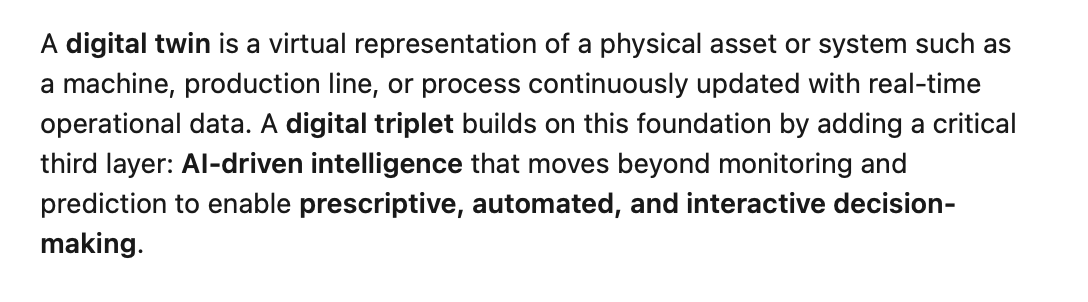
While a standard digital twin mirrors a physical asset, a Digital Triplet adds an AI-driven decision layer. This is the shift from a Chatbot that simply answers questions to an Agent that acts. Cloneable’s agents sense, decide, and execute, triggering work orders and diagnosing failures within defined operational guardrails without waiting for human intervention.
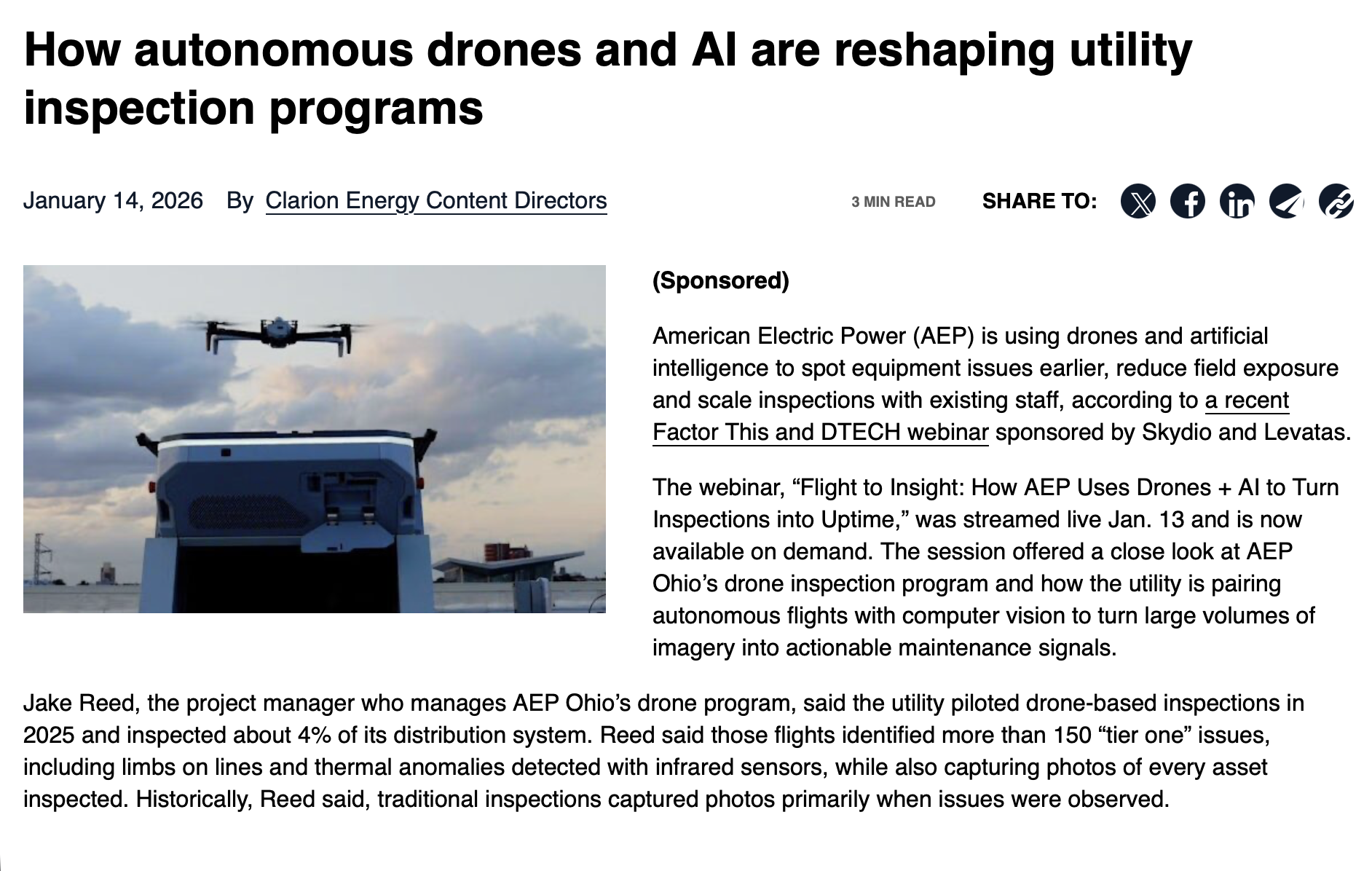
The sheer absurdity of manual work is best illustrated by AEP Ohio’s drone program. In 2025, they captured nearly 500,000 images of their distribution system. It took a single expert over 500 hours of manual review just to identify 150 "tier one" issues. By shifting to agentic systems, that same volume of data can be reviewed in minutes, moving the expert from a "searcher" to a "fixer."
Real-Time Reality: Construction Verification and LiDAR
The most expensive mistake in the energy sector is building a design that doesn't match the field's reality.
Build it right, the first time.
Cloneable’s Construction Verification application uses mobile devices equipped with LiDAR and AI Object Detection to compare "as-designed" models with "as-built" reality. Field supervisors can now catch deviations instantly on-site, ending the era of costly rework.
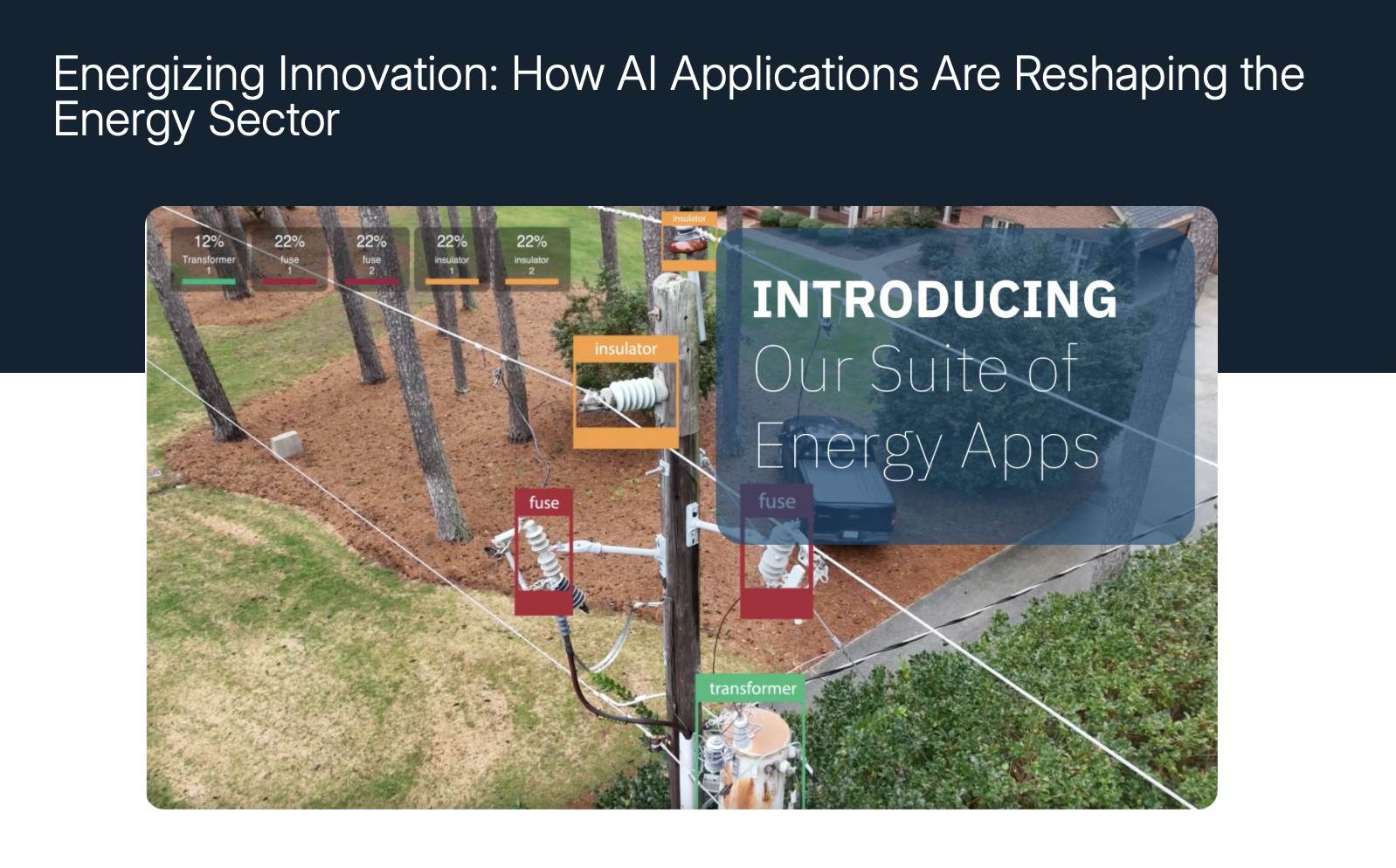
LiDAR Precision: Verify 3D specs directly on-device, including attachment heights and guy wire lead lengths.
Vegetation Management: Use mobile LiDAR to capture DBH (Diameter at Breast Height) tree measurements with less than 1-inch variance compared to manual, subjective methods.
AI Object Detection: Automatically validate equipment inventory and pole configuration against design files in the field.
OCR Integration: Instantly digitize and associate information from pole ID plates and barcodes.
Maintenance: Detecting the "Cigar"
By monitoring the "energy signature" of infrastructure, AI agents detect friction-related heat or misalignments well before traditional sensors would even trip.
A stark example occurred during an AEP Ohio drone inspection. Thermal imaging flagged a utility pole that looked unremarkable to the naked eye. When crews pulled the pole, they found it was "burning from the inside out" and it looked exactly like a smoldering cigar.
By optimising machine efficiency and catching defects early, industrial operators are slashing their baseline power consumption by 15–20%.
Conclusion: The Grid is a Variable
We are entering the era of the "AI-orchestrated, human-led enterprise." In this landscape, the power grid is a variable to be optimised for profit.
The future belongs to the Autonomous Industrial Microgrid.
We are already seeing large-scale factories use reinforcement learning to manage on-site generation and storage. In some regions, these facilities are now generating more profit by trading their energy flexibility back to the grid during peak hours than they are from their actual manufactured goods.
The grid is evolving at machine speed.
As we move toward 2030, the industry faces a binary choice: Do you continue to rely on paper-based processes and the hope that your experts won't retire, or do you clone that knowledge and lead the transition to Industrial Intelligence?