AI Startups
Listen Labs is Weaponizing AI to Kill the Traditional Survey


TL;DR
For decades, product teams have had to choose between cheap and shallow surveys or slow and expensive focus groups. Listen Labs just hit a $500M valuation by using AI to interview millions of users overnight, fundamentally breaking the market research compromise.
Imagine betting your entire product roadmap on a spreadsheet full of bots and bored click-farmers. That is exactly what the $140 billion market research industry has forced us to do for decades.

We have been stuck in a toxic compromise: blast out rigid, multiple-choice surveys for cheap data or bleed cash on human focus groups that take months to tell you what you needed to know yesterday.
But that binary choice is officially dead.
The Headache of Market Intelligence
If you have ever been adjacent to product management or data analytics, you know the historical headache of market intelligence. You are usually forced to choose between two broken systems: blast out a massive quantitative survey to get statistically significant (but incredibly shallow) data, or run human-moderated focus groups that give you rich context but take months and cost a fortune.
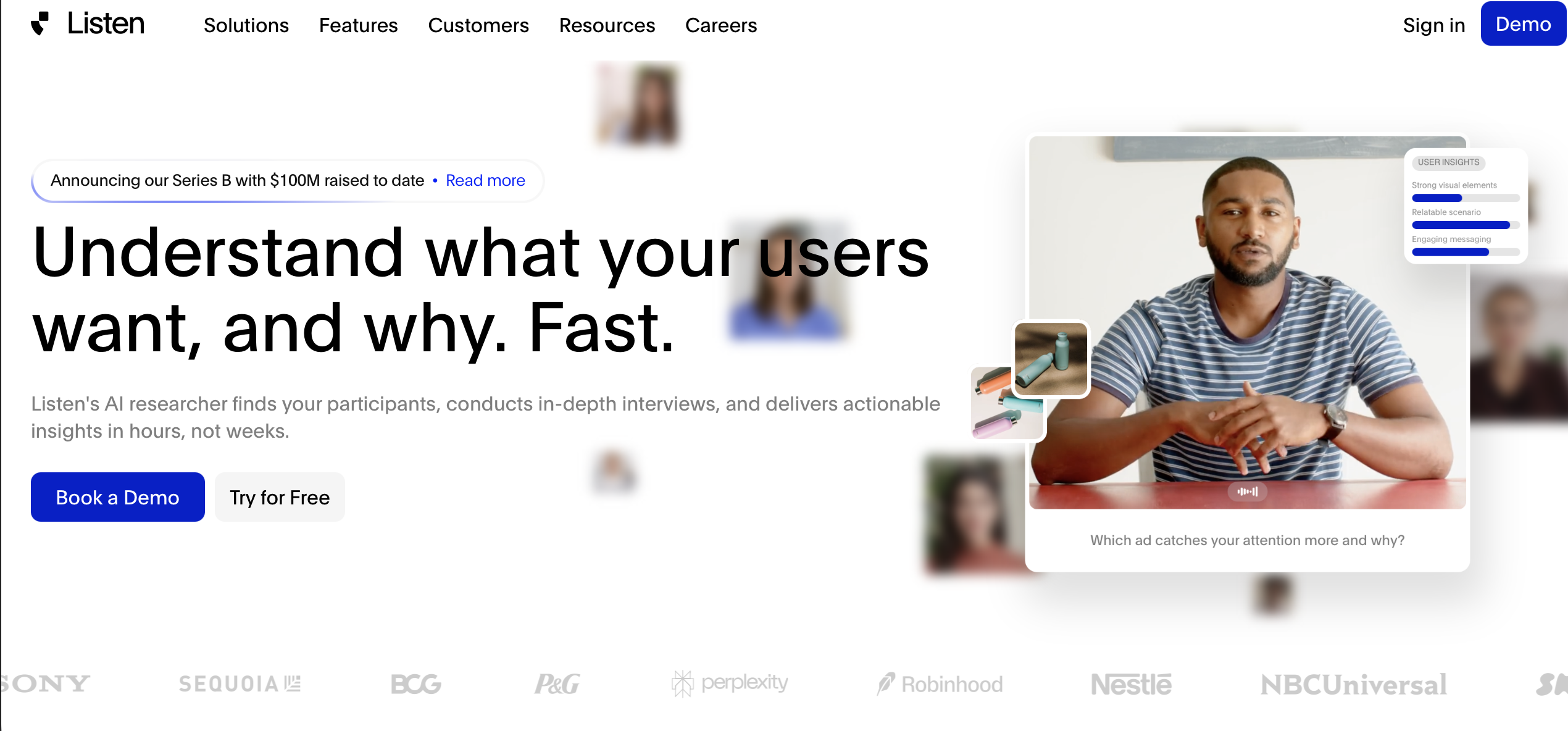
Listen Labs, an AI startup that just hit a $500 million valuation by completely eliminating this compromise, are doing what previously seemed impossible: qualitative research at absolute scale.
Here is a deep dive into how they are architecting the autonomous future of enterprise intelligence.
From Viral Apps to Enterprise AI
Listen Labs was forged in the chaos of hyper-growth. Co-founders Alfred Wahlforss (a serial entrepreneur with Y Combinator pedigree) and Florian Juengermann (a former competitive programming champion who built motion planning systems for Elon Musk at Tesla) originally teamed up at Harvard to build BeFake.

BeFake was a generative AI app that exploded overnight, racking up 20,000 downloads in a single day. But that growth came with a massive GPU bill and a critical blind spot: the founders had no idea why users were staying or churning. Traditional surveys gave them superficial false precision and manual interviews wouldn't scale.
So, they built an internal tool using Large Language Models to simulate human interviewers and chat dynamically with their users. They quickly realized this internal tool was worth infinitely more than the app itself. They pivoted and secured early funding, and Listen Labs was born.
The Architecture of Autonomous Interviews
Listen Labs operates on a multi-modal workflow designed to get to the truth.
When a company wants to test a product concept, they do not just send out a rigid 1 to 5 rating matrix. Instead, the AI conducts semi structured, one on one interviews. If a participant gives a vague answer, the AI dynamically generates follow up questions to dig into the underlying reasons behind their choices.
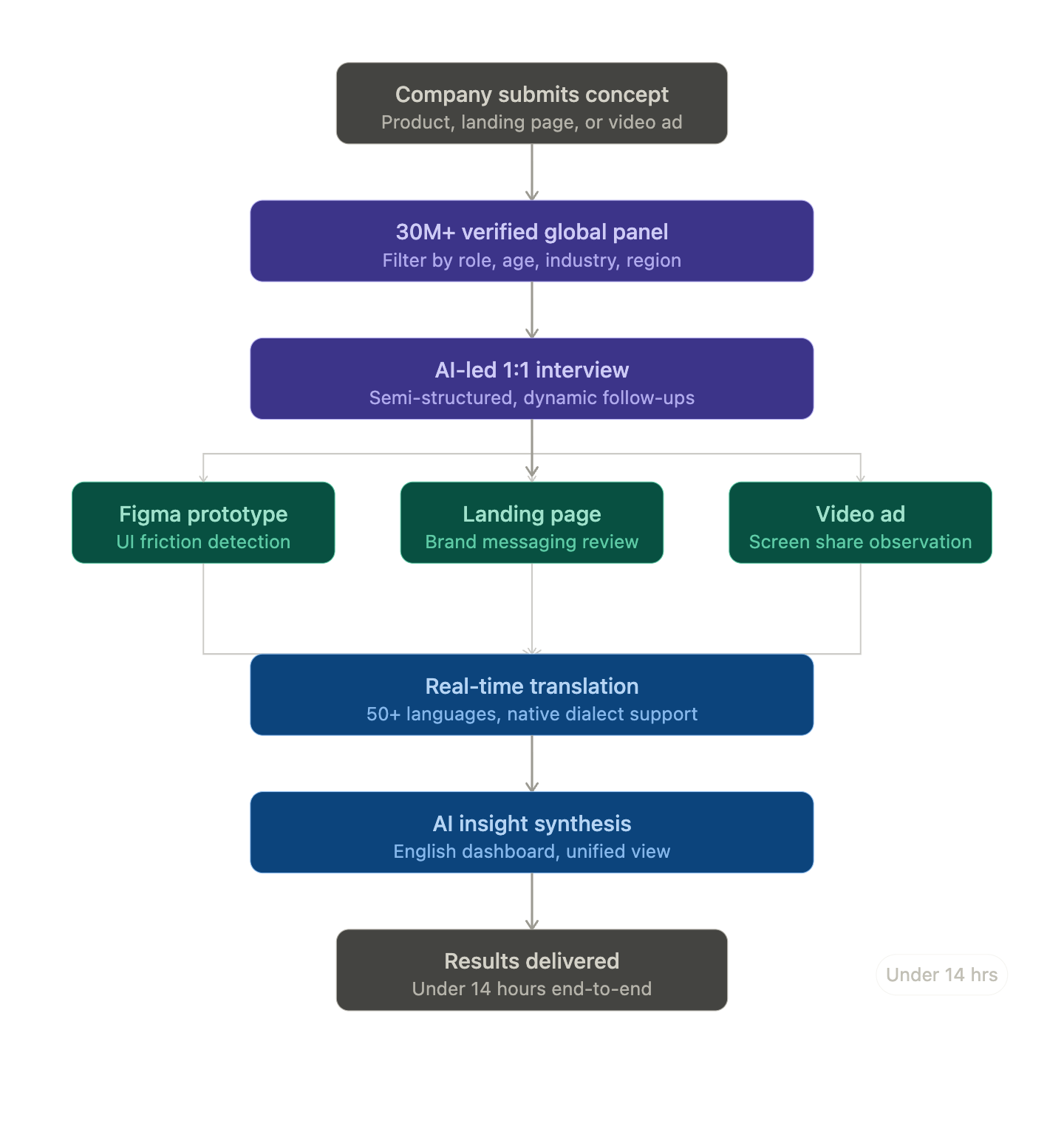
Here are the key technical advantages:
Instant Global Reach: The platform taps into a continuously verified global panel of over 30 million participants. You can filter for anyone, from high school students to niche enterprise executives.
Borderless Synthesis: It supports real time translation and transcription across more than 50 languages. A product manager in San Francisco can interview a user in Tokyo in their native dialect, and have all the insights neatly synthesized into an English dashboard.
Multi Modal Testing: The AI can observe users interacting with Figma prototypes, landing pages, or video ads via screen share, dynamically asking questions about UI friction or brand messaging.
The coolest part? The entire process takes under 14 hours.
Solving the Fake Data Crisis
Anyone who works with data knows that modern survey responses are heavily polluted. Bot networks, click farms and bad actors using AI tools routinely compromise up to 20% of traditional survey responses.
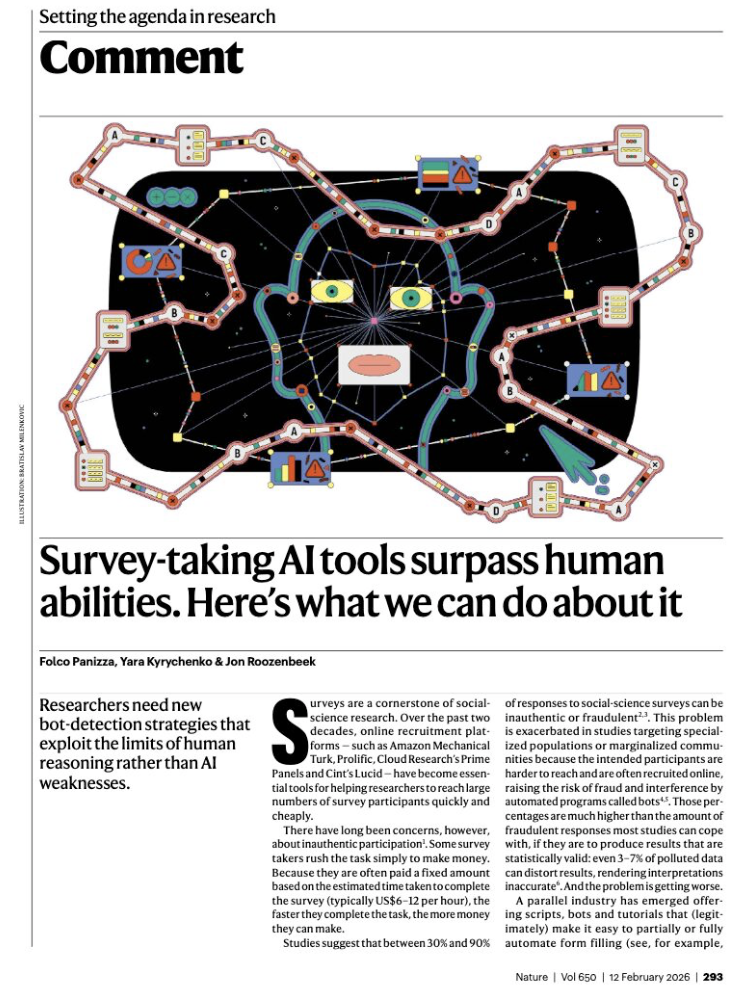
Listen Labs solves this with a proprietary system they call the Quality Guard. By mandating video or audio responses, the platform uses computer vision to verify there is a real human on the other end. It cross references demographics with LinkedIn profiles to ensure B2B identity matches and the AI actively monitors the conversation to flag bots or contradictory statements in real time. The result is that fraud rates drop to near zero, giving you a pristine data pipeline.
Moving at the Speed of Software
The speed Listen Labs provides is already changing how Fortune 500s and high growth startups operate:
Microsoft: They scaled their global research for Copilot. What used to take six weeks of manual translation and administrative drag was done in a single day, delivering global user stories directly to the executive team.
Chubbies: They overcame the massive logistical hurdle of interviewing children for a new line of shorts. By scaling their sample size by 24x via AI video interviews, they discovered the internal mesh liner was scratchy, which allowed them to redesign the product before a disastrous launch.
Sweetgreen: They parsed massive amounts of unstructured customer feedback to identify a real demand for higher daily protein, leading directly to the launch of their highly successful Protein Bowl.
The Berghain Billboard
Scaling a tech company fast in San Francisco requires elite engineers, and that talent is heavily guarded by mega cap tech giants offering massive salaries. Knowing they could not compete on cash alone, the Listen Labs founders orchestrated a brilliant growth hack.

They spent $5,000 renting a blank and unbranded billboard in Nob Hill displaying only a web protocol followed by five cryptic numbers: 100264, 76709, 1097, 675, 12084.
To normal people, it was gibberish. To elite AI developers, it was a provocation.
The numbers were OpenAI token IDs that decoded to a secret URL. The link led to a gamified technical puzzle requiring engineers to build an optimization algorithm functioning as a digital bouncer for the infamous Berlin techno club, Berghain.
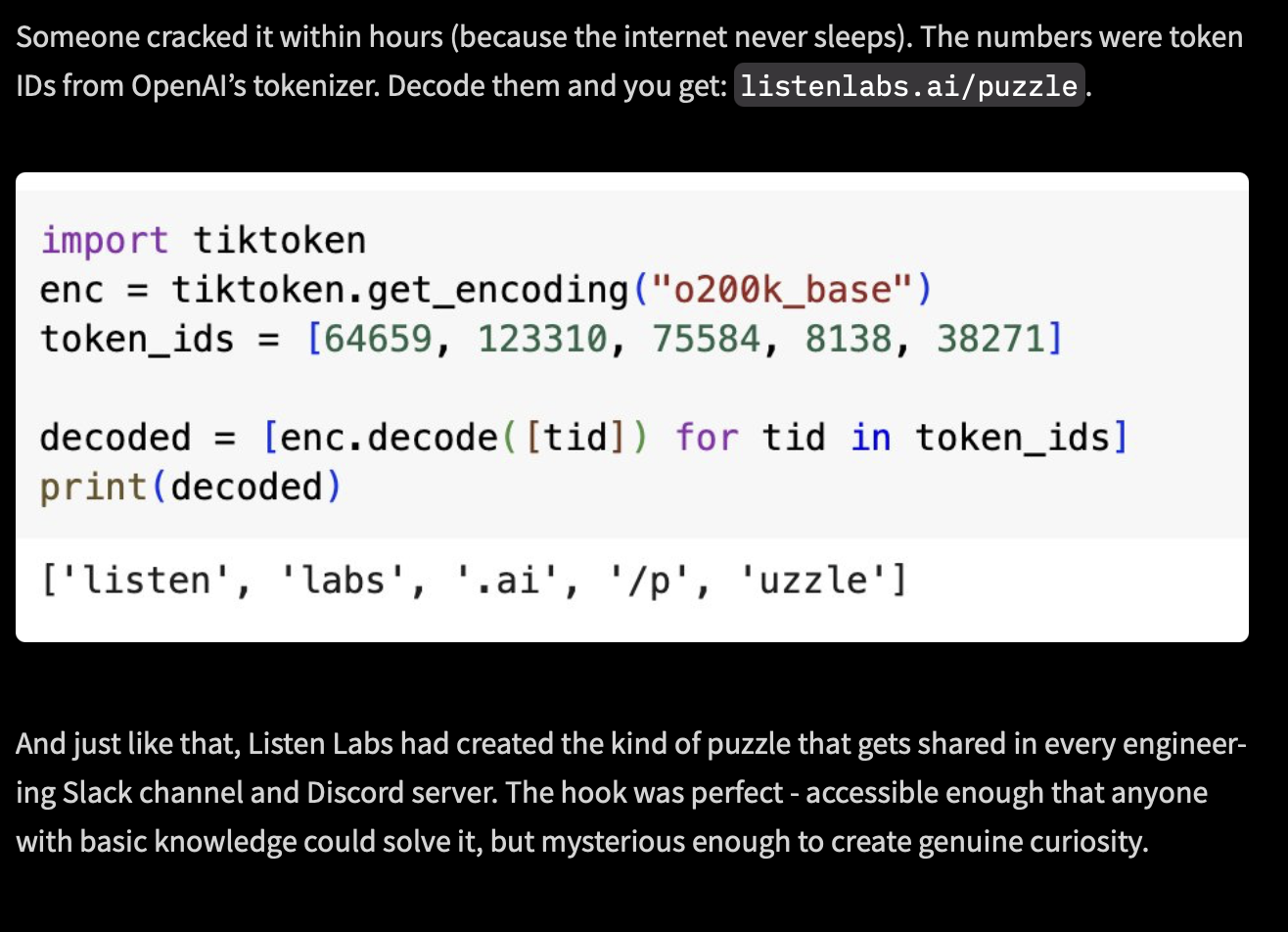
The stunt went insanely viral on Hacker News and Discord, generating 5 million impressions and securing a pipeline of 430 elite engineers who cracked the code, completely bypassing the Silicon Valley talent war.
Synthetic Customers and Autonomous Agents
Armed with a recent $69 million Series B, Listen Labs is not stopping at data aggregation. Their roadmap points to a deeply autonomous future:
Synthetic Customers: Using their massive data lake of emotional and psychological conversational profiles, Listen Labs plans to train highly localized AI models that perfectly simulate a brand customer base. Product teams could instantaneously test hypotheses against these digital twins before validating with real humans.
Autonomous Agents: They are moving from passive analysis to active execution. If the AI detects a recurring churn complaint regarding pricing, it could automatically deploy an agent to interface with the company CRM and instantly offer personalized retention discounts to save the account in real time.
The Verdict
Listen Labs is acting as an aggressive market consolidator, collapsing a sprawling stack of legacy tools into a single AI native ecosystem.
For modern startups and enterprises, the ability to seamlessly integrate the authentic voice of the customer into daily agile development is the new baseline.