AI Startups
The Samora AI Story: The Underpaid Rumour


TL;DR
Social media loves a scandal about underpaid tech workers. We dive into the viral outrage surrounding Y Combinator backed Samora AI to see if they really exploit their interns or if the internet just failed at basic math.
Samora AI is a breakout face in the Y Combinator Winter 2026 cohort. Based in San Francisco and Bengaluru, they have spent the last few weeks in the middle of a social media storm. One side of the conversation focuses on their sophisticated voice AI stack. The other side is fixated on a viral rumor.
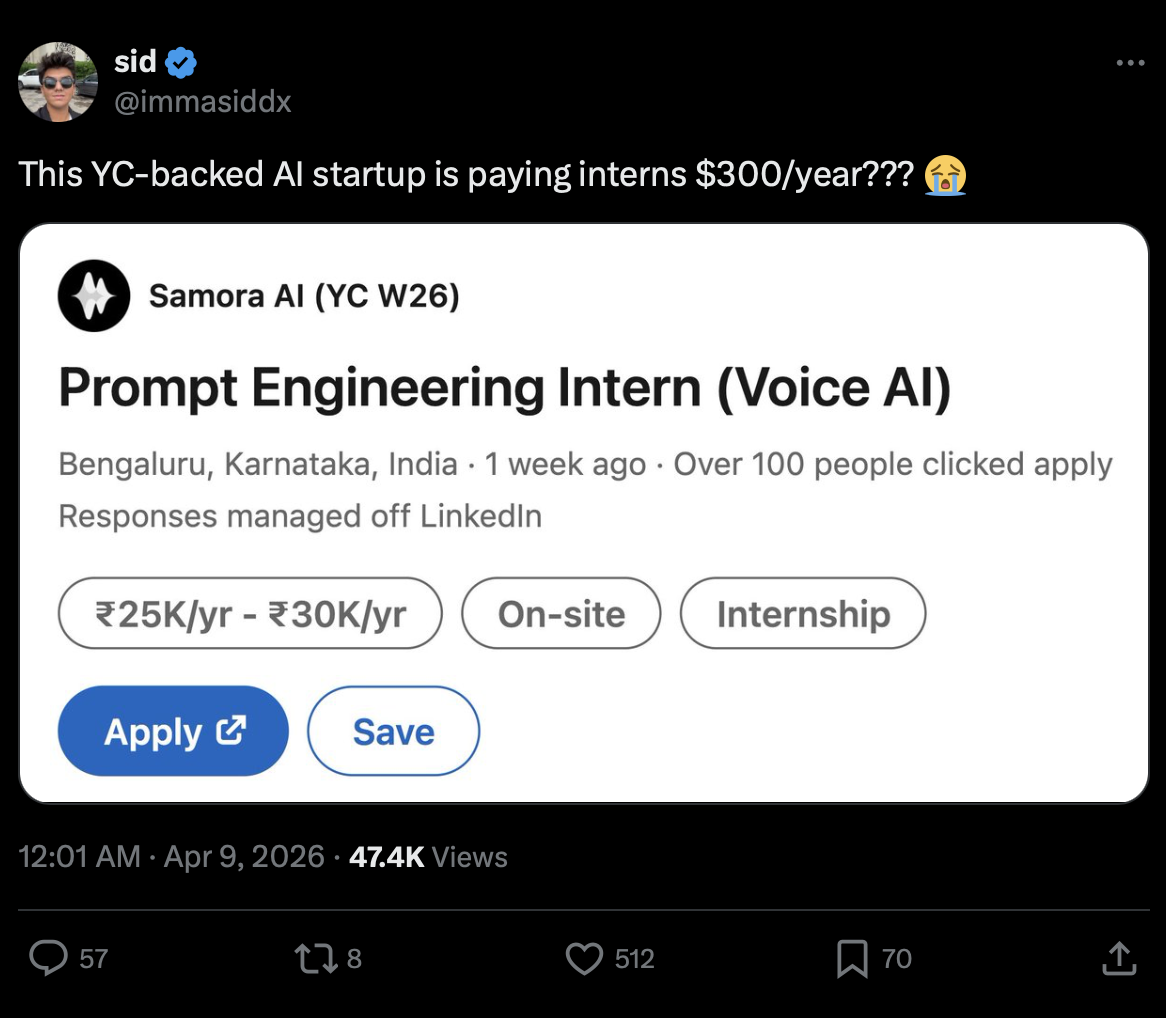
Tech forums are claiming the company pays its interns a measly three hundred dollars a year. I am digging into the technical side of this startup to separate the promise from the noise. We want to see if the reality matches the internet outrage.
Kartik Sawhney and the Path to Samora
CEO Kartik Sawhney is an insider who knows exactly where current systems fail.
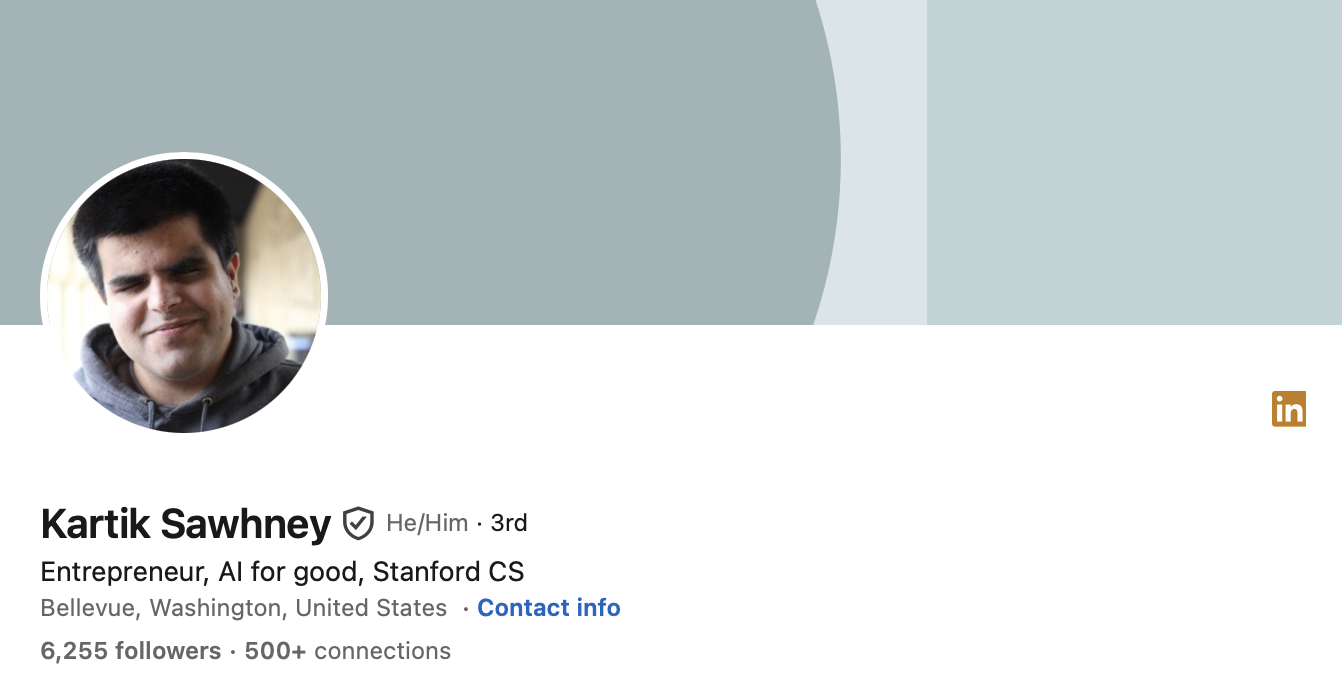
As a blind student in Delhi, he had to appeal to the board chairman of the CBSE just to study science. He eventually went to Stanford after the Indian Institutes of Technology blocked his path. For years, he manually typed out textbooks for four hours every day because accessible versions did not exist. He now navigates computers using screen readers at 20x the speed of normal speech. This perspective informed his desire to fix voice AI, which he found to be surface-level and unreliable in real-world environments. The founding team includes:
Kartik Sawhney (Stanford CS)
Vineeth Kumar (BITS Pilani)
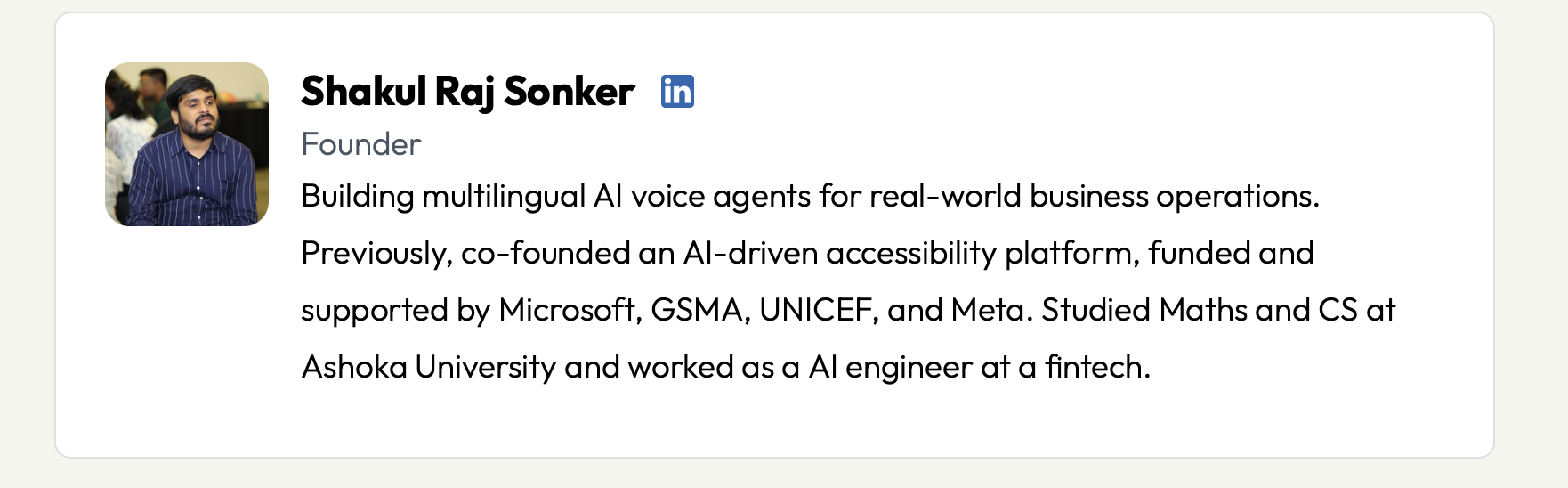
Shakul Raj Sonker (Ashoka University)
Technical Deep Dive
Samora AI avoids the 'do-it-yourself' platform model that most startups favor. Instead, they provide fully managed agents that handle design, testing and monitoring. Their engineering layers are built to handle the chaos of real conversations. The stack relies on OpenAI Whisper to handle speech recognition. It uses GPT-4 and GPT-5 for reasoning alongside expressive text-to-speech for the output. These agents are optimized for the Indian market. They handle code-switching and local dialects with ease. This means they can follow a conversation even when a user switches languages mid-sentence.
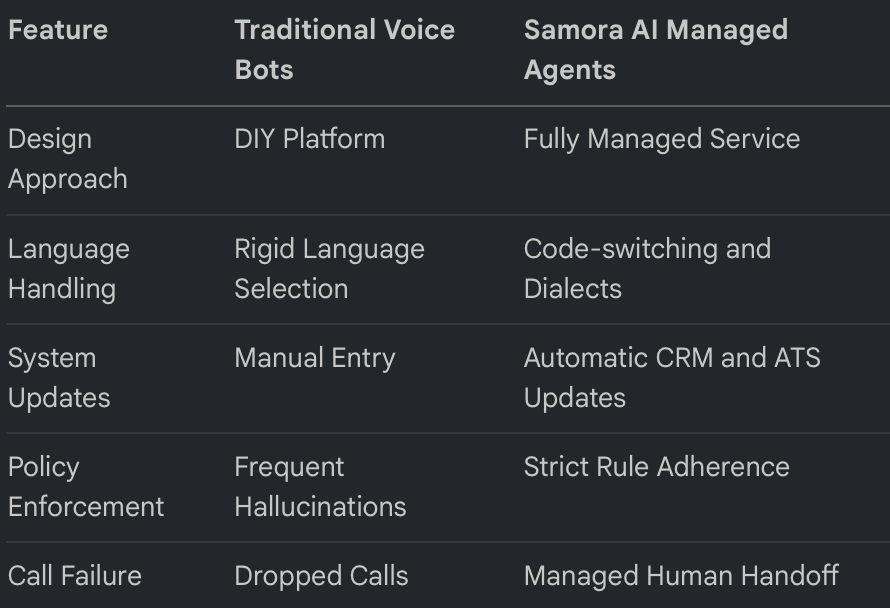
The managed human handoff feature is the critical safeguard. When an agent encounters a sensitive call or a confidence drop, it performs a 'warm handoff' to a human operator. This reliability is likely why one recent deployment reached 100,000+ candidates while saving 1,700 recruiter hours.
The $300/year Controversy
I have spent some time looking at the specific allegation that Samora AI pays interns only $300 per year. Based on YC job listings and audit data, we found that the actual stipend is ₹25,000 to ₹30,000 per month. At current exchange rates, ₹25,000 is almost exactly $300. On an annualized basis, an intern at Samora AI earns between ₹300,000 and ₹360,000. This is approximately $3,600 to $4,285 per year.
Contextualising Intern Culture in India
Samora AI offers a paid internship. This distinguishes it from the 'certificate-only' scams like Unified Mentor or Younity that we often see on Reddit.
Those entities exploit students for free labor in exchange for a worthless PDF.
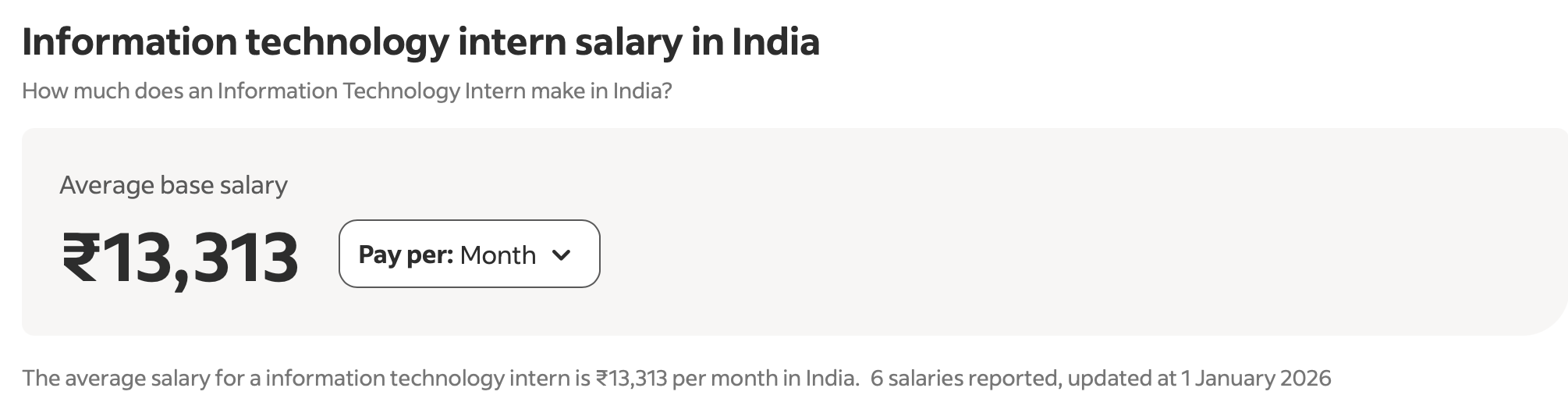
Samora's monthly stipend of ₹25k to ₹30k sits well above the national IT intern average of ₹13,313. It also exceeds the Delhi minimum wage for skilled graduates which is ₹24,356.
The job description is transparent about the workload.
It calls the role an 'intense 3-month sprint' where interns are on the hook for real customer outcomes. It is a high-pressure environment for students from Tier 1 colleges. I see this as a high-intensity startup culture rather than an exploitative scam.
The Business of Voice
The company is financially healthy. They are reporting a monthly recurring revenue (MRR) of $50,000 and are currently targeting $100,000 MRR. They are competing in a crowded space against giants like Dialpad and Observe.AI. However, they have already secured impressive real-world applications.
A VP at Signify used the tool to reach thousands of stakeholders instantly.
UNICEF utilised the platform to provide youth employment services to beneficiaries with limited connectivity.
The Verdict
Samora AI is a high-growth startup rather than a sweatshop. While the work is described as disciplined and repetitive, the compensation is competitive by Indian market standards. The viral controversy serves as a reminder of how easily a monthly figure can be misinterpreted as a yearly salary in global tech discussions.
I advise young developers to vet stipends and job descriptions before joining early-stage startups. Don't be a victim of scam.
Look for clear, written promises of compensation rather than just certificates.
As for the future, voice-first interfaces are becoming the default across software. Samora AI is positioning itself to lead that transition by focusing on reliability and human-in-the-loop safety.