AI Startups
Pylon Is Disrupting the B2B industry


TL;DR
Moving all that data is complex and you risk losing important customer history. Training everyone on a new system means downtime and a productivity slump right when you can't afford one. For established teams already utilizing robust capabilities, the pain of a full migration is a tough sell unless the B2B-specific advantages significantly outweigh the 100K–250K switching cost.
The death of the ticket
For years, B2B support has been stuck in a system that was never really built for it. The old helpdesk model is centered on the ticket, but enterprise support usually happens in Slack Connect, Microsoft Teams, shared threads, and long-running customer conversations.
That’s where context lives BUT that’s also where it gets lost.
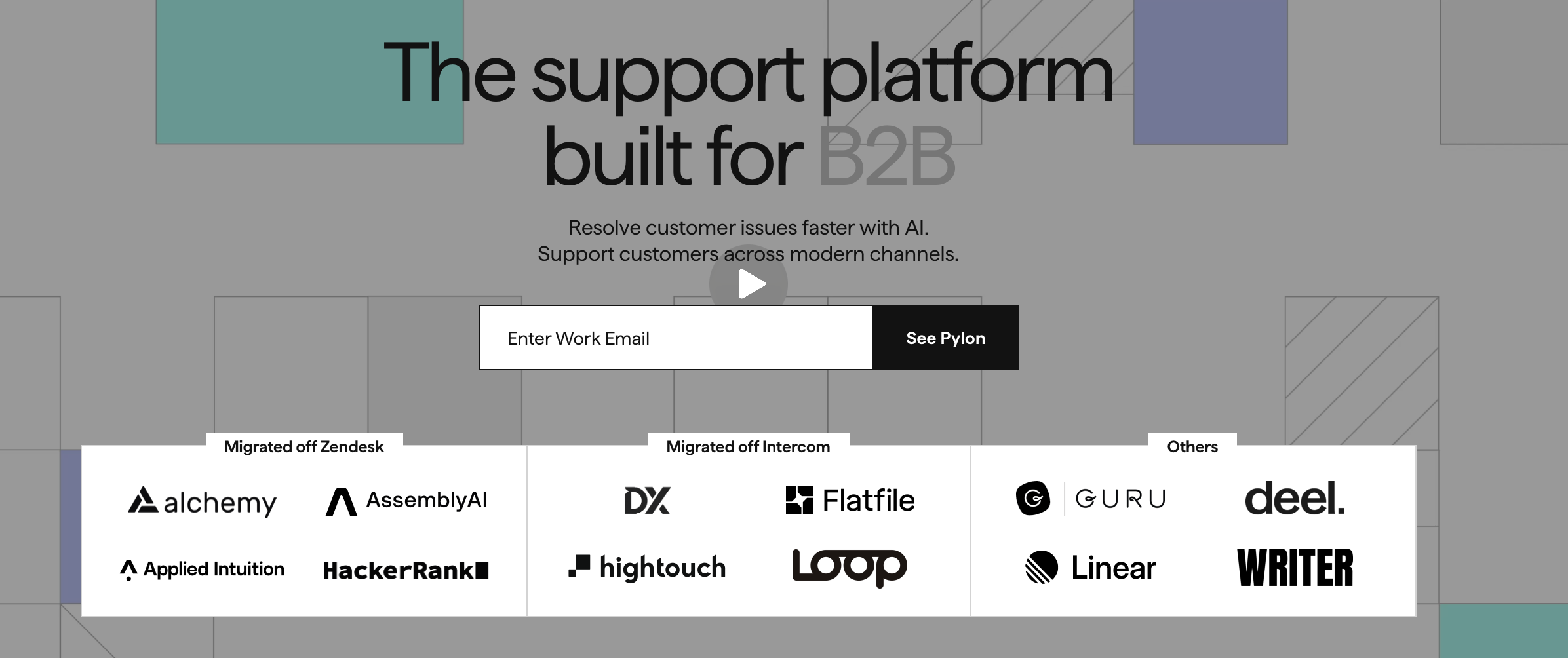
Pylon’s betting the future of B2B support is about managing relationships better. Founded in 2022 and based in San Francisco, the company positions itself as an AI-powered operating system for post-sales teams, with support, customer success and product feedback all living in one place.
Who Pylon is
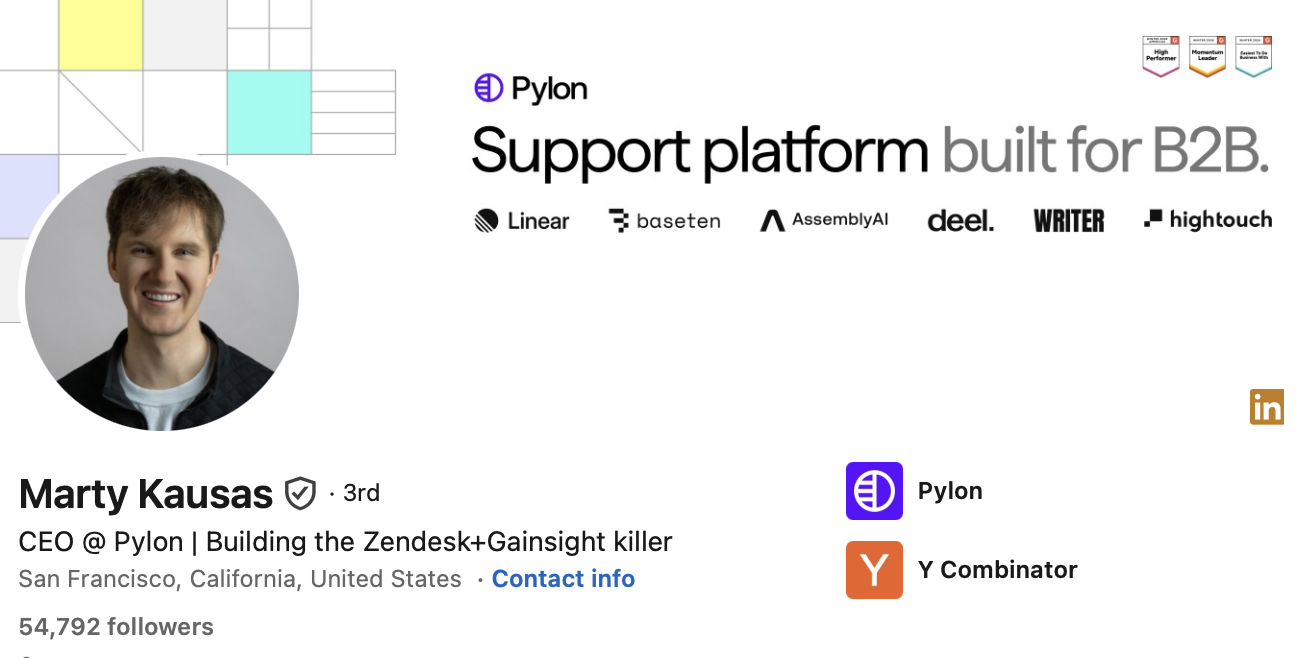
Pylon was founded by Marty Kausas, Advith Chelikani, and Robert Eng.
The company raised a $31 million Series B in August 2025, co-led by Andreessen Horowitz and Bain Capital Ventures, bringing total funding to $51 million.
The broader message from the company is clear: legacy support tools were built for transactional B2C workflows, while B2B support needs something much more relationship-driven.
That’s the gap Pylon is trying to own.
Why this matters
The strongest argument for Pylon is that support in B2B is a live feed of account health, product pain, churn risk, and expansion opportunity.
When those conversations stay trapped in scattered messages, the company loses visibility and teams work off partial information
That’s why Pylon leans so hard into omni-channel support across Slack, Teams, Gmail, Discord, and in-app chat. The point is to turn messy conversations into usable signals.
What stands out
One of the more interesting parts of Pylon’s story is the way it connects support to the rest of the company.
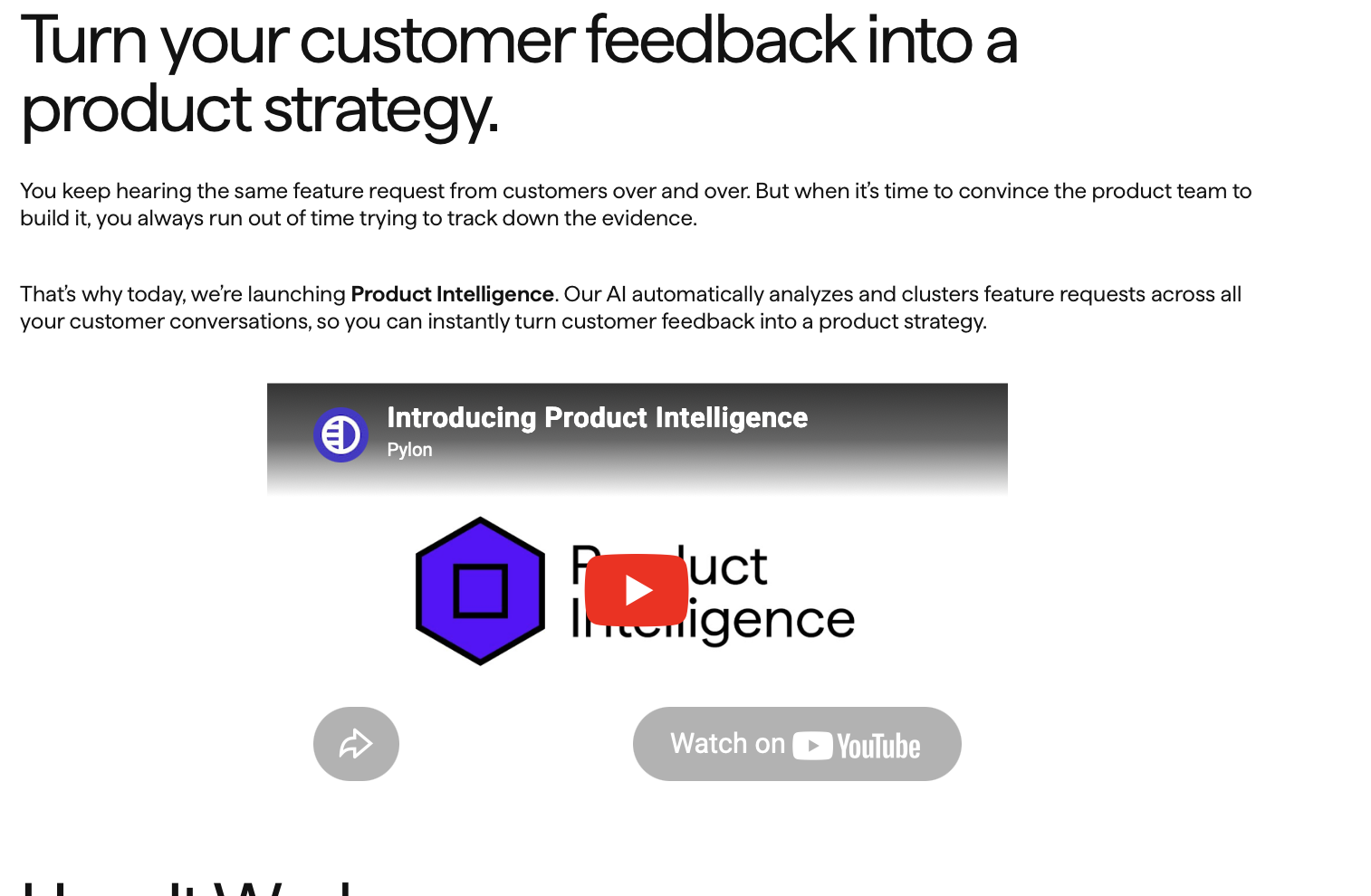
Their “Account Intelligence” and “Product Intelligence” features are meant to bridge the gap between customer conversations and action inside the business. Feature requests can be clustered, quantified by ARR impact, pushed into Linear or Jira, and then tracked all the way through to customer follow-up when the work ships.
That part feels more useful than the usual “AI support” pitch. It’s not just automation for the sake of automation. It’s trying to make customer conversations legible to the rest of the company.
Real-world proof
Pylon points to customers like Together AI and AssemblyAI to show what the platform can do in practice.
Together AI said it cut cross-team handoffs by 90%, moving from 30–60 minute context-gathering meetings to instant sharing.
AssemblyAI reported that Pylon’s AI agents could resolve around 50% of eligible support inquiries without human help.usepylon+2
Those are the kinds of numbers that make the pitch feel real.
If accurate, they suggest the product is doing more than just making support look modern. It is changing how teams operate.
The tradeoff
The biggest downside is also obvious: this is more of a rip-and-replace move than a light add-on. That makes adoption harder, especially for companies already deep in Zendesk or Intercom.
But Pylon’s answer is basically that B2B support is different enough that the old stack can’t really be patched forever.
That’s a strong argument, even if it comes with real migration friction. The question for buyers is whether the long-term benefit outweighs the short-term pain.
The culture angle
There’s also a talent-market story here.
JobsByCulture shows Pylon with a 3.0 Glassdoor rating and a 4.0 work-life balance score, which suggests the challenge may be less about burnout and more about growing pains. For a fast-scaling company, that usually means strong intensity, constant change, and a lot of pressure to keep shipping.