AI Startups
Why Did Nobody Think of Using Google Sheet As A Database?


TL;DR
In the fast-evolving world of AI-assisted development, the simplest tool on your desktop (Google Sheet) is quietly redefining software architecture. As vibe coding turns human intent into executable systems, spreadsheets have become the ultimate safeguard against the chaos of generative AI. They aren’t just for budgets anymore; they’re becoming the trusted brain of modern applications.
The Death of the Database Schema
Traditional development workflows have long been stalled by database complexity—ORMs, migrations, SQL tuning, and schema management. Instead of accelerating progress, the data layer often slows teams down.
In the age of vibe coding, developers express intent in natural language while AI agents generate the implementation.
Lovable, Bolt, Windsor.ai are all dominating the market.
But what if I told you that a new competitor has emerged using a different backend approach: Google Sheets
By decoupling data persistence (the spreadsheet) from implementation logic (the AI code), builders get simplicity, transparency and immunity from schema fatigue.
Protecting Your Data
When developers rely on agentic AI tools, like Lovable, Bolt, or Replit, they face a paradox: speed comes at the cost of control. Deep iterative sessions can lead to “hallucination debt,” where an AI makes unintended backend changes while fixing front-end issues.

Using a Google Sheet as your data layer creates a “firewall” between your content and the AI’s code generation loop. Even if the agent misfires, your data remains untouched and easily recoverable.
“Keeping the data in a Google Sheet puts it safely outside the agent’s blast radius.” — Shikeeb A, Sheet Ninja Maker
Empowering the Client
Great product strategy recognizes one timeless truth: the best interface is the one your client already understands. Instead of investing weeks into building admin dashboards, spreadsheets let clients manage live data directly.
With Sheet Ninja, developers can give clients control with a simple link.
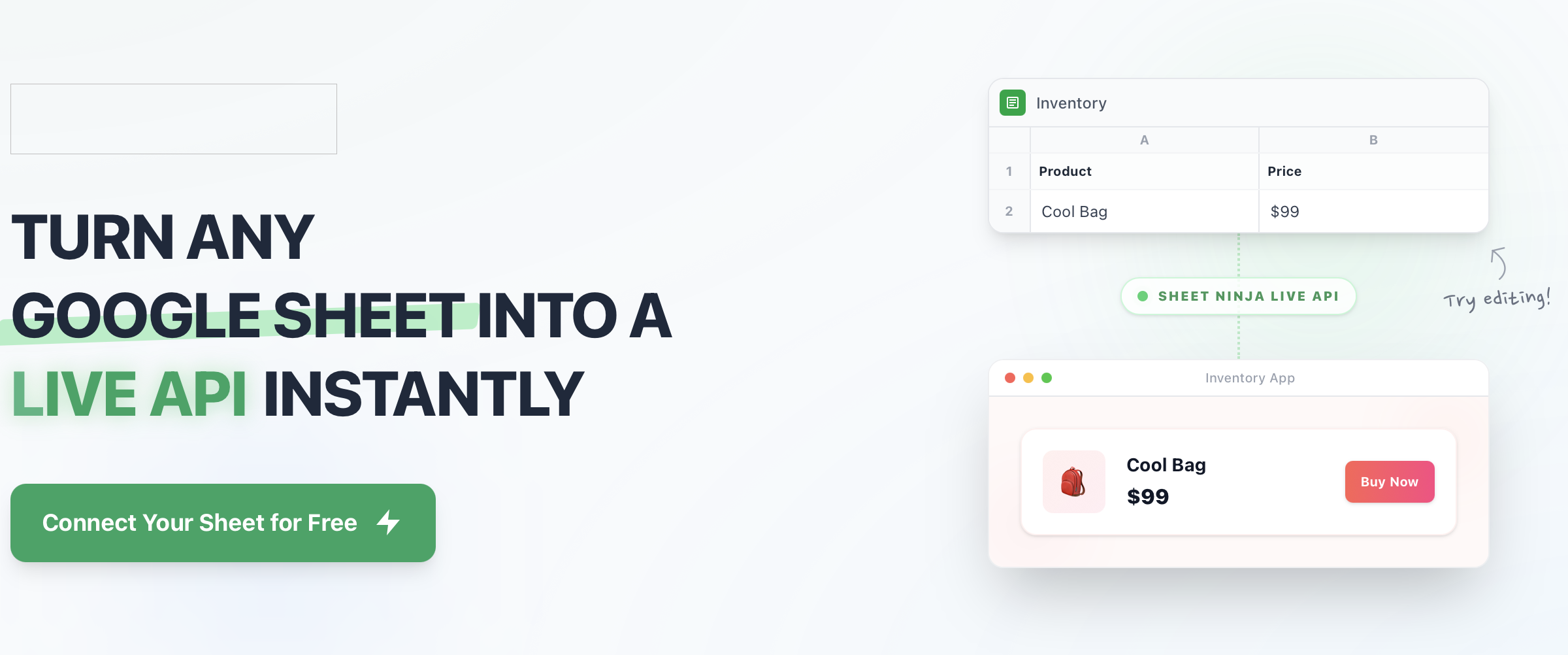
Need to update a product price? Change a cell. The app updates instantly.
Common use cases include:
Job Boards: Curate listings and monetize featured rows.
LLM Context Stores: Host structured Q&A knowledge for AI models.
Inventory Tools: Build instant search dashboards in hours, not months.
Waitlists: Validate startup ideas overnight with live spreadsheet-based data capture.
Competitors
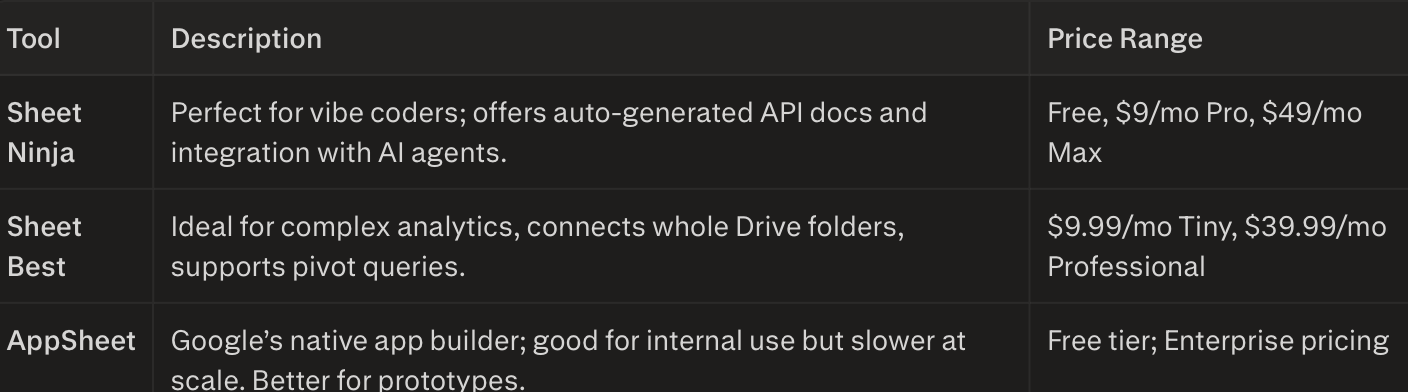
Just imagine: Instead of building your web app with Google App Script and Google Sheets, Sheet Ninja handles everything from the frontend to the backend and produces a production-ready SaaS.
Shots on Goal Economics
AI-assisted development reverses traditional cost models. Instead of heavy upfront infrastructure spending, teams now backload costs to scale only with usage.

This “Shots on Goal” philosophy coined by JP Morgan recognizes that cheaper iteration increases the odds of success. A founder can launch 30 product variations for the price of three, dramatically improving product-market fit potential.
Developers evolve from syntax writers to conductors of intent, orchestrating ideas through AI rather than manually coding them.
“You are not a coder anymore. You are a conductor.” — Andrej Karpathy / IBM Research
Conclusion: Can Google Sheets handle the backend?
Software development is shifting from code generation to composition by intent. The spreadsheet anchors ta readable, stable and shareable core of every product.
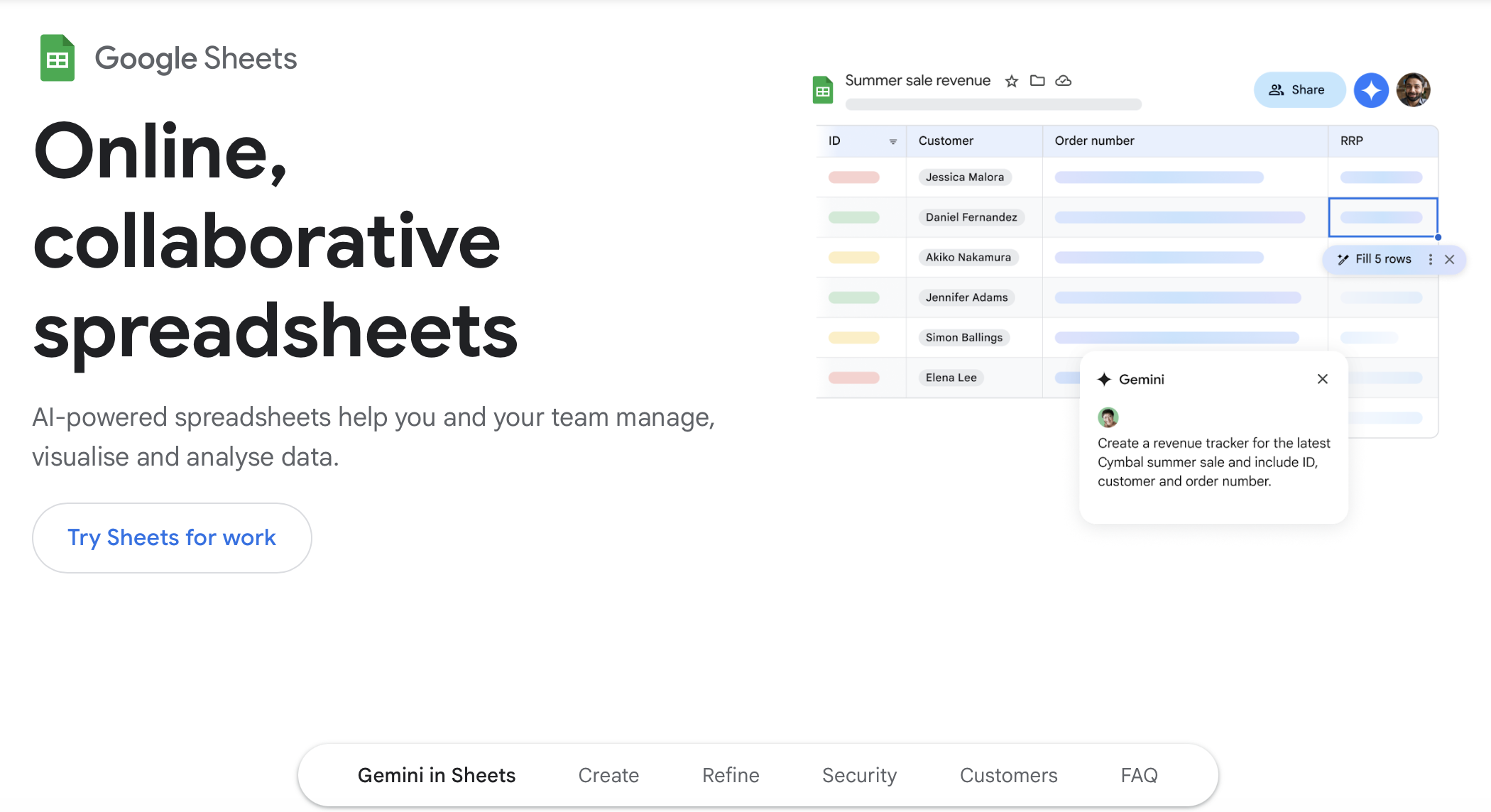
But whether or not the database can handle the application when it scales to a larger user group is still in question.
Because Google Sheets have a limit of 10,000 cells and API limits per hour.
Let's see how Sheet Ninja solves this bottleneck.